You're So Busy Doing the Work That You're Losing the Next Work
- Rob Pratt
- Automation , Construction , Business
- May 12, 2026
Table of Contents
You’re So Busy Doing the Work That You’re Losing the Next Work
Why peak season creates peak opportunity—for your competitors
Your phone has been ringing since 7 AM. Three crews running, a supplier issue on the Hendricks job, and your office manager just texted asking which materials go to which site. You’ve got 11 voicemails you haven’t checked since Tuesday.
Somewhere in that stack is a homeowner with hail damage, insurance money in hand, and a decision to make. She called three roofers. She’s going with whoever calls back first.
You’ll get to it tomorrow.
By then, she’s already signed with the contractor down the street—the one whose crew isn’t even as good as yours.
That’s the feast creating the famine. Most contractors never see it coming until fall rolls around and the pipeline is empty.
The Seasonal Trap Nobody Warns You About
Spring and summer are when you make your year. Most revenue happens in a 4-5 month window. Every owner knows this.
What most don’t calculate is what that surge costs on the customer service side:
- Voicemail response times stretch from hours to days. When you’re managing 4 active crews, returning calls from prospects falls to the bottom of the list. They don’t wait.
- Existing clients feel ignored. The homeowner whose job started Monday hasn’t heard from you since. They’re texting your personal cell at 9 PM asking about the dumpster.
- New leads hit your site at peak rates—and bounce at peak rates. Web traffic spikes in busy season. Response rates tank. You’re paying for leads you’re too busy to capture.
- Your best office people are buried in active-job fire drills. The intake and follow-up work that normally gets done falls completely off.
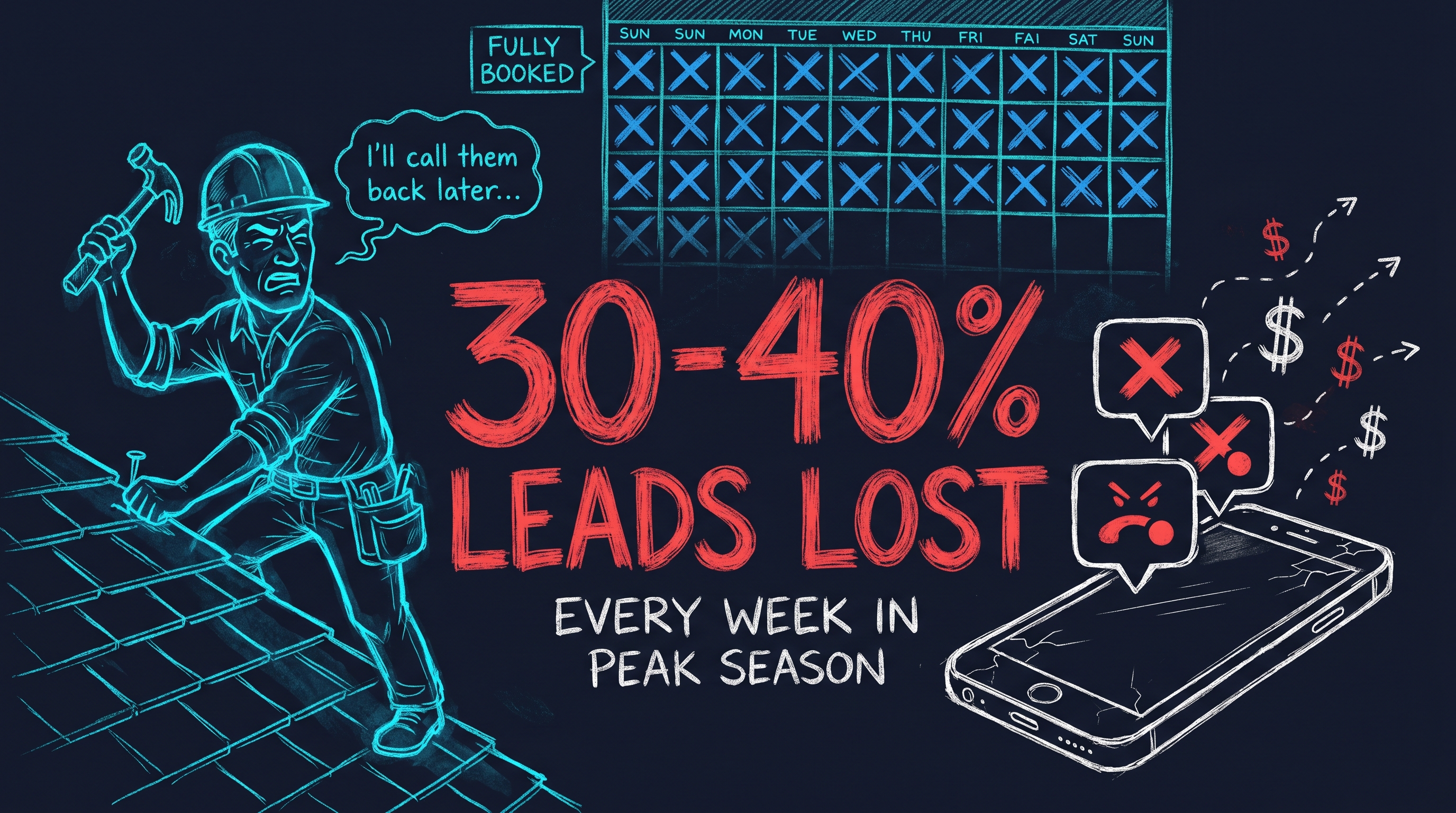
The number that stings: the average contractor running 4-6 active jobs during peak season loses 3-5 qualified new leads per week to slow or no response. At $10,000 average job value, that’s $30,000-$50,000 per week walking to a competitor.
Over a 16-week busy season? You do the math.
Two Types of Contractors in June
The Manual Contractor. A new lead submits a contact form at 10 AM Wednesday.
- 10:00 AM: Lead comes in
- 3:30 PM: Office manager sees it between fielding crew calls
- 3:45 PM: She sends a generic “we’ll be in touch” reply
- Thursday: Owner means to call but gets pulled to a job site issue
- Friday: Lead is on someone else’s roof
Meanwhile, the three clients in progress are texting with update questions. The owner answers from his truck. His wife answers two more from home that night. By Saturday, he’s exhausted and the business made money—but next month’s pipeline has three fewer jobs than it should.
The feast is real. The famine it creates is invisible until October.
Next: How Smart Contractors Stopped Losing Leads During Busy Season - What automated lead capture actually looks like during peak months.
P.S. - If you want to map out what an automated intake system would look like before your next busy season, book a 60-minute Strategy Session. $150, credited toward implementation.
AIL-3 | AI Transparency: This article was drafted with AI assistance and reviewed, edited, and approved by the author. All recommendations are based on 20 years of experience in the roofing and construction industry.