Table of Contents
It’s Wednesday afternoon. You just wrapped up a roofing tear-off in the scorching heat. Your phone buzzes—another quote request email from Tuesday morning. You meant to respond yesterday, but the day got away from you. “I’ll knock it out tonight,” you tell yourself.
By Friday, you finally send the estimate. Professional. Detailed. Fair price.
The homeowner already signed with someone else. Response time: 18 minutes.
The Real Cost of Slow Quotes
Let’s do the math on what those 3-day delays are actually costing you.
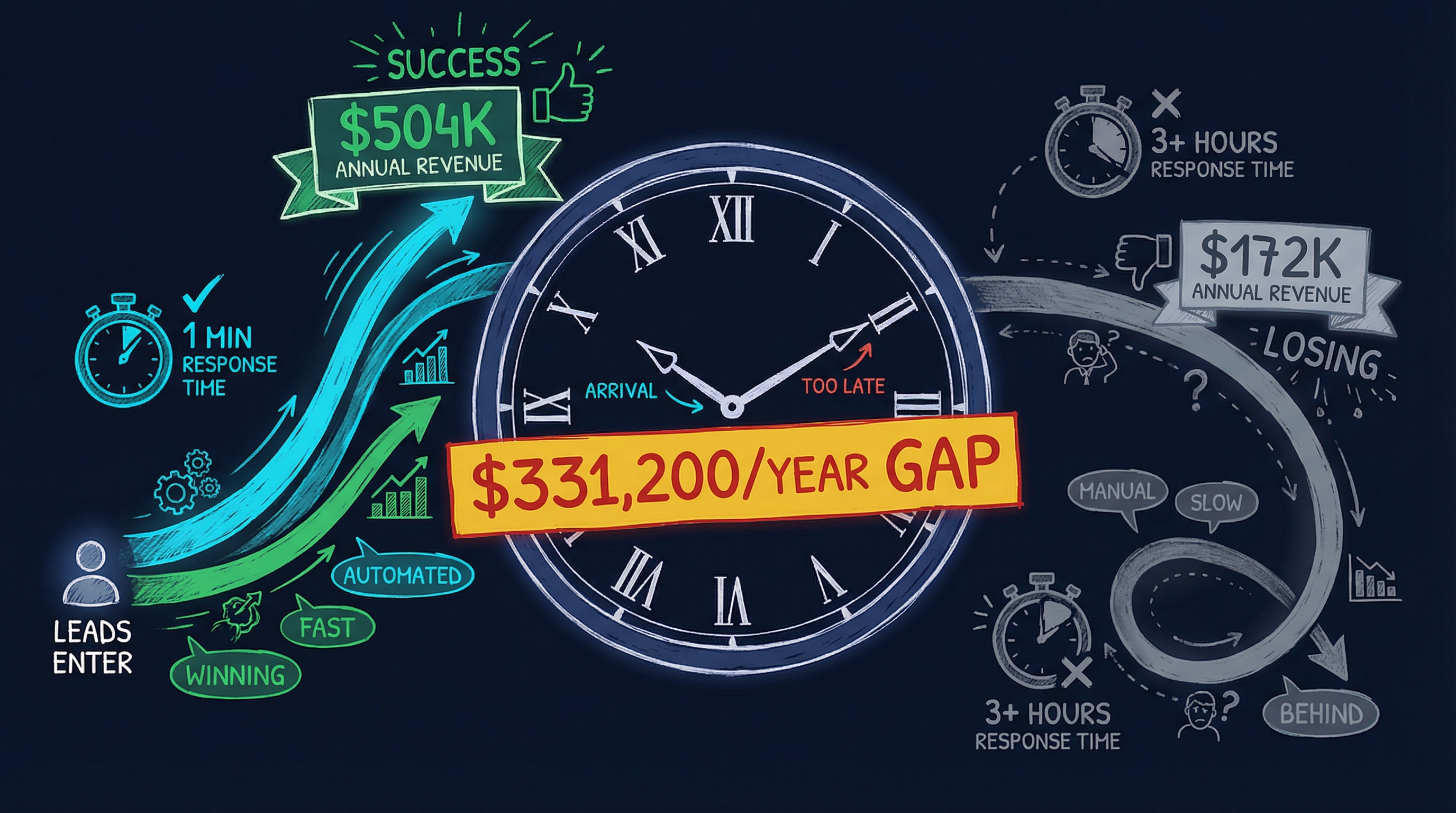
You receive 4-6 quote requests per week. That’s roughly 250 opportunities annually. Industry data shows you’re 21 times more likely to convert a lead when you respond within 5 minutes versus 30 minutes. Wait 3 days? Your conversion rate drops from 30% to under 5%.
The calculation:
- 250 leads per year
- Average job value: $8,500
- 30% conversion (fast response) = 75 jobs = $637,500
- 5% conversion (3-day response) = 12.5 jobs = $106,250
- Difference: $531,250 in lost opportunity
Even if you capture just 20% of that gap through faster responses, that’s $106,250—or roughly $40,000 in actual won jobs you’re leaving on the table because your estimates sit in your inbox.
Why Quote Delays Happen
You’re not lazy. You’re running a business with your boots on the ground.
The problem is that quality estimates require:
- Pulling specs from the inquiry
- Checking material costs (which changed again last week)
- Calculating labor based on crew size
- Formatting everything professionally
- Double-checking the math
- Writing a personal message
That’s 45-60 minutes of focused desk work. When you’re on-site from 7 AM to 6 PM, that desk work waits until “later.” Later becomes tomorrow. Tomorrow becomes “I’ll catch up this weekend.”
Meanwhile, your automated competitor sent their quote 17 minutes after the lead came in. Professional PDF. Itemized breakdown. Payment link included.
How Automation Changes the Game
Automated quoting systems don’t eliminate your expertise—they eliminate the manual data entry that delays your response.
Here’s what changes:
Before: Lead comes in → sits in inbox → you manually build estimate → send 2-3 days later → 5% conversion
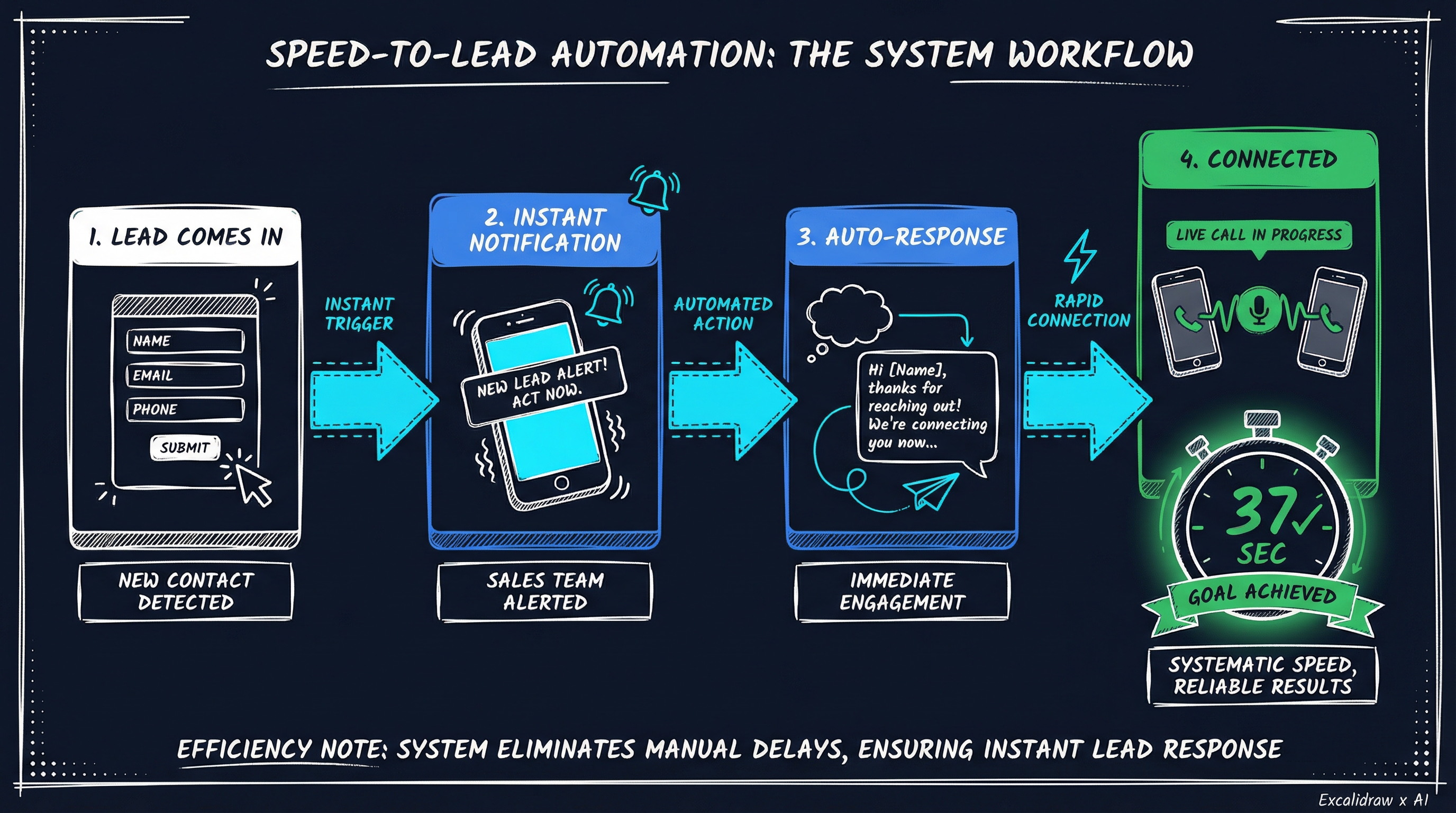
After: Lead comes in → system pulls details → generates professional quote → you review/approve on phone → customer receives quote in under 20 minutes → 25-30% conversion
You’re still reviewing every quote. You’re still applying your pricing expertise. You’re just not wasting 45 minutes reformatting the same estimate template you’ve used 1,000 times.
Real example from a roofing contractor in Texas: Before automation, average quote response time was 2.8 days. After implementing automated quoting, average response dropped to 14 minutes. Conversion rate went from 7% to 28%. That’s an extra $180,000 in closed business in year one.
The Competitive Moat Nobody Talks About
Fast quotes aren’t just about winning more jobs. They’re about making it impossible for slow competitors to win jobs away from you.
When you respond in minutes, you set the anchor price in the homeowner’s mind. Every quote that comes after yours gets compared to yours—even if it arrives 3 days later with a better price.
Homeowners are busy too. When they get a professional quote 18 minutes after requesting it, their thought isn’t “let me wait 4 more days for other quotes.” It’s “this contractor has their act together—let’s move forward.”
What It Actually Takes
Building an automated quoting system isn’t about learning to code or becoming a tech expert. It’s about connecting the tools you probably already use.
A typical implementation:
- Week 1: Map your current quoting process and integrate with your CRM
- Week 2: Build quote templates with your actual pricing
- Week 3: Test with 5-10 sample quotes and refine
- Week 4: Go live with automated system
Cost range for contractors with 1-10 employees: $5,000-$15,000 one-time investment. Most see break-even within 3-4 months from increased conversions alone.
Finding the Right Solution
Every construction business quotes differently. Roofing quotes need pitch calculations and material estimates. Plumbing quotes need fixture specs and permit costs. HVAC quotes need load calculations and equipment selection.
The right automation system fits your specific workflow—not a one-size-fits-all software package you’ll fight with for years.
If you want to understand exactly how automated quoting could work for your business, I offer a 60-minute Construction Automation Strategy Session ($150, credited toward implementation if you proceed). We’ll map your current quoting process, identify where automation creates the biggest impact, and build a specific roadmap for your business.
No sales pitch. Just a detailed analysis of where you’re losing time and money—and exactly what it would take to fix it.
The Two Types of Contractors
There are two types of contractors emerging in every market:
Type 1: Still manually building estimates on nights and weekends, responding in 2-3 days, wondering why conversion rates keep dropping.
Type 2: Automated quote generation, 15-20 minute response times, 25-30% conversion rates, booking 3-4 months out.
The gap between these two is widening every quarter. Customers are getting used to instant responses. Your automated competitors are training them to expect it.
The question isn’t whether quote automation will become standard in your market. It’s whether you’ll be early enough to build the competitive advantage—or late enough that you’re just catching up to survive.
Frequently Asked Questions
How much does construction quote automation actually cost?
Construction quote automation systems typically range from $5,000-$15,000 for small to medium contractors (1-10 employees). Implementation takes 3-4 weeks. Most contractors see break-even within 3-4 months through increased conversion rates, with ROI of 300-500% in year one.
Can automated quotes handle custom pricing and complex estimates?
Yes. Modern quote automation systems are template-based with conditional logic, not rigid one-size-fits-all calculators. You define your pricing rules, material costs, labor rates, and complexity factors. The system applies your expertise automatically while you maintain full review and approval control before quotes go out.
How fast can I actually respond to quote requests with automation?
Most automated quoting systems generate professional PDF estimates within 5-15 minutes of lead submission. You receive a notification for review/approval (takes 2-3 minutes on your phone), then the system sends the quote automatically. Total time from inquiry to customer receiving quote: 15-20 minutes average.
What if I’m not tech-savvy enough to use automated quoting?
Quote automation systems are designed for contractors, not IT professionals. You’ll spend 2-3 hours in initial training learning to review/approve quotes on your phone. The technical setup, integrations, and template building are handled during implementation. If you can review a PDF on your phone and tap “approve,” you can use these systems.
Will automated quotes make me look less personal or professional?
The opposite. Automated quotes include personalized introductions, professional formatting, itemized breakdowns, and payment links—elements most contractors skip when manually rushing through estimates. Customers perceive fast, detailed responses as MORE professional than slow, bare-bones quotes sent days later.
P.S.
One-time investment, lifetime value. You own the automation system, not rent it. Break-even in 3-4 months, then it saves you time and wins you jobs forever.
The contractors who automated first in your market? They’re the ones with 90-day backlogs while everyone else scrambles for scraps. First mover advantage in construction automation is real—and it compounds.
AIL-3 | AI Transparency: This article was drafted with AI assistance and reviewed, edited, and approved by the author. All recommendations are based on 20 years of experience in the roofing and construction industry.