Table of Contents
Why Your Best Employees Aren’t Threatened By Automation (They’re Asking For It)
How construction automation turns good employees into unstoppable revenue generators
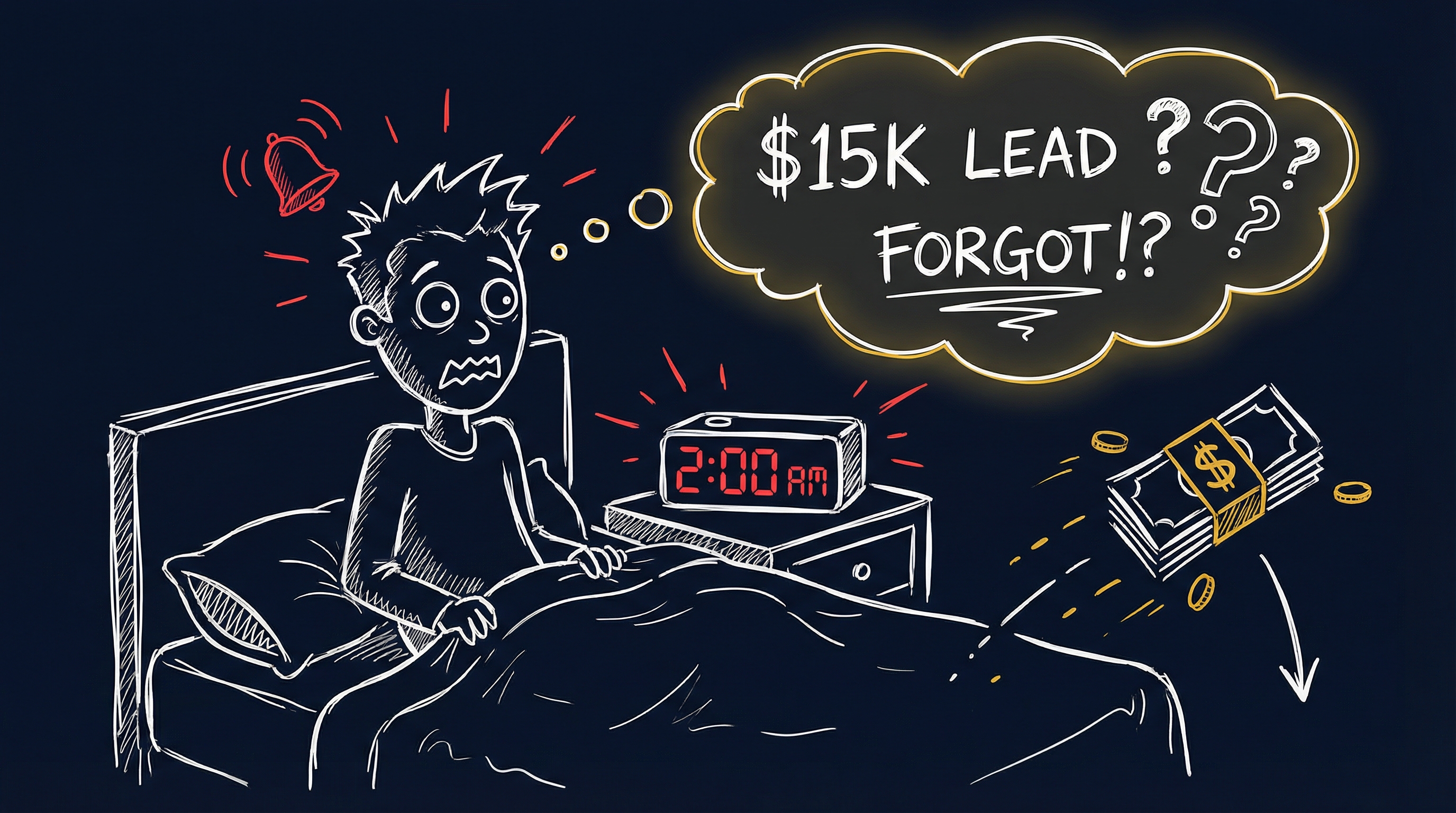
The Monday Morning Question Nobody Expected
Sarah walks into your office Monday morning. She’s been your lead estimator for six years—accurate, reliable, and respected by customers. You’ve been hesitant to mention the automation system you’ve been researching, worried she might think you’re trying to replace her.
Then she asks: “When are we getting that automated quote system the Anderson Roofing guys have? I heard they can turn around estimates in 20 minutes now while I’m still spending 3 hours per quote.”
Wait. She’s asking for automation?
Here’s what most contractors miss: Your best employees aren’t threatened by automation. They’re frustrated by the manual busywork that keeps them from doing what they’re actually good at.
The Superpower Your Employees Already Have (That Manual Work Is Hiding)
Think about what your best people bring to the table:
Your top estimator knows exactly which material substitutions save money without sacrificing quality. She can spot problematic job conditions in photos that inexperienced estimators miss. She builds rapport with homeowners that turns estimates into signed contracts.
Your project manager has relationships with the best subcontractors who’ll drop everything when you have an emergency. He knows how to schedule crews to maximize efficiency across multiple job sites. He can smooth over customer concerns before they become complaints.
Your sales closer understands which objections are real and which are negotiating tactics. She reads customers better than anyone and knows exactly when to ask for the signature.
But right now, all of them are spending 60-70% of their time on tasks that have nothing to do with these superpowers.
The Excel Sheet Trap (And What It’s Really Costing You)
Let’s track what your lead estimator actually does during a typical 8-hour day:
- 2 hours: Manual data entry into estimating software
- 1.5 hours: Switching between systems to gather pricing info
- 1 hour: Creating and formatting proposal documents
- 45 minutes: Copying information from lead forms into CRM
- 30 minutes: Following up on quotes via email/phone
- 30 minutes: Chasing down missing information from suppliers
- 1.5 hours: ACTUAL estimating work using her expertise
Out of 8 hours, only 1.5 hours utilize the skills you’re actually paying her for.
The other 6.5 hours? A college intern with proper automation could handle all of it—and probably faster.
What Happens When You Give Superpowers a Platform
Scenario: Before Automation
Your estimator gets a lead for a 3,000 sq ft roof replacement:
- Manually enters customer info into CRM (8 minutes)
- Opens estimating software, re-enters customer details (6 minutes)
- Looks up current material pricing across 3 supplier websites (15 minutes)
- Calculates labor hours based on roof pitch/complexity (20 minutes)
- Creates proposal document, formats it properly (25 minutes)
- Manually emails to customer with follow-up reminders (10 minutes)
- Total time: 84 minutes
- Time using expertise: 20 minutes
Scenario: With Automation
The same lead arrives:
- System automatically populates all customer data everywhere (0 minutes)
- Real-time material pricing loads automatically (0 minutes)
- She focuses on the complexity assessment and risk factors (12 minutes)
- System generates professional proposal with her assessment (0 minutes)
- Automated follow-up sequence activates itself (0 minutes)
- Total time: 12 minutes
- Time using expertise: 12 minutes
She goes from handling 6 quotes per day to 25+ quotes per day, with HIGHER quality because she’s spending all her time on what actually matters.
The Employee Retention Secret Nobody Talks About
You know what makes great employees leave construction companies?
It’s not the pay. It’s not the hours.
It’s the soul-crushing frustration of being treated like a data entry clerk when they’re capable of so much more.
Your best estimator didn’t spend years learning the industry to copy and paste addresses between systems. Your top project manager didn’t build a network of reliable subs just to spend his day updating spreadsheets.
When you automate the busywork, three things happen:
1. Job Satisfaction Skyrockets They’re finally doing the work they’re actually good at. The work that matters. The work that uses their brain.
2. Performance Improves Dramatically When someone can focus 8 hours on high-value work instead of 1.5 hours, results compound fast. More quotes. Better accuracy. Stronger customer relationships.
3. They Become Virtually Irreplaceable An automated estimator doing 25 quality quotes daily with deep industry knowledge? That’s not just an employee—that’s a competitive weapon.
The Real Automation Fear (And Why It’s Backwards)
Here’s what contractors worry about:
“If I automate too much, will I still need Sarah? I don’t want to make my best employee redundant.”
But here’s the reality check: Your competitors aren’t worried about making Sarah redundant. They’re building systems that make their own employees 5x more productive.
And when they can respond to leads in 15 minutes with professional quotes while you’re still taking 2-3 days? They’re not just faster—they’re taking market share.
The question isn’t whether Sarah will have a job after automation. It’s whether your business can compete without it.
What Your Employees Actually Want
I’ve implemented automation for dozens of construction companies. Every single time, the owner worries about employee resistance.
And every single time, the employees have the same response after seeing it in action:
“Why didn’t we do this five years ago?”
Your team isn’t afraid of automation. They’re tired of:
- Entering the same information into 6 different systems
- Switching between platforms that don’t talk to each other
- Spending hours on tasks that should take minutes
- Working late because “administrative work” ate their productive time
- Watching automated competitors run circles around them
Automation isn’t a threat to good employees. Manual busywork is.
The Superpower Multiplier Effect
When you automate the grunt work, your employees don’t just get faster—they get better.
Your estimator suddenly has time to:
- Build relationships with customers during the quote process
- Identify value-add opportunities that increase project size
- Refine estimates based on past project data
- Actually think about the work instead of just processing it
Your project manager can finally:
- Proactively manage potential issues before they become problems
- Optimize crew scheduling for maximum efficiency
- Build deeper subcontractor relationships
- Focus on customer satisfaction instead of administrative firefighting
Your sales team gets to:
- Follow up with leads while they’re still hot
- Spend time understanding customer needs instead of filling out forms
- Close more deals because they’re not buried in paperwork
- Actually enjoy their jobs again
Real Numbers From Real Companies
Small Roofing Company (8 employees):
- Before automation: Lead estimator handling 6-8 quotes daily
- After automation: Same estimator handling 20-25 quotes daily
- Result: 3x quote volume with same headcount, 43% higher close rate due to response speed
Mid-Size General Contractor (22 employees):
- Before automation: Project managers spending 15+ hours weekly on administrative tasks
- After automation: Same project managers spending 3 hours weekly on admin
- Result: Each PM handling 40% more projects simultaneously without quality loss
Growing HVAC Company (14 employees):
- Before automation: Office manager working 50+ hour weeks, considering hiring help
- After automation: Same office manager working 40 hour weeks, handling increased volume
- Result: Avoided $35,000 annual hiring cost while increasing capacity
The Two Types of Construction Companies Emerging
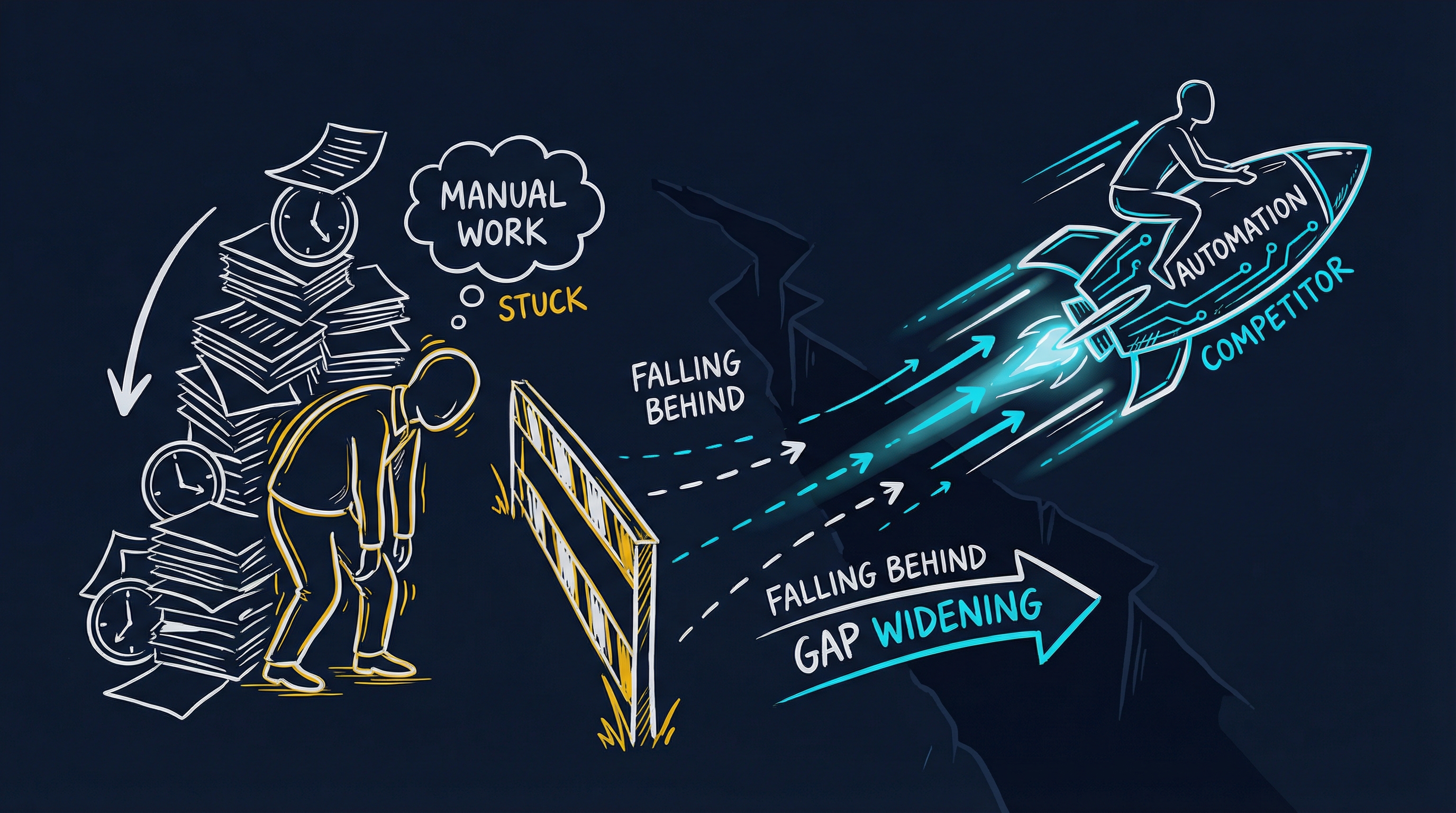
Type 1: Manual Labor (Going Extinct) Employees spending 60-70% of time on busywork. Slow response times. Limited capacity. Good people leaving for automated competitors who “get it.”
Type 2: Supercharged Teams (Dominating Markets) Employees spending 80-90% of time on high-value work. Lightning-fast response. Scaling without adding headcount. Becoming the employer everyone wants to work for.
The gap between these two is widening every single month.
What This Actually Looks Like
Let me be specific about what construction automation enables for your team:
Quote Generation System:
- Employee focuses on: Technical assessment, risk evaluation, customer consultation
- System handles: Data entry, pricing lookups, proposal formatting, follow-up sequences
- Result: 5x more quotes with higher accuracy and better customer experience
Project Management Automation:
- Employee focuses on: Schedule optimization, issue resolution, quality control
- System handles: Status updates, document organization, communication sequences, deadline tracking
- Result: 40% more projects managed per person without overtime
Client Communication Platform:
- Employee focuses on: Relationship building, problem-solving, strategic guidance
- System handles: Routine updates, appointment scheduling, payment reminders, FAQ responses
- Result: Better customer satisfaction with 50% less communication time
The Question Isn’t If, It’s When
Here’s what I know after 12+ years in construction and now specializing in automation:
The companies automating today are building unbeatable competitive advantages. Not just in efficiency—in employee retention, service quality, and market reputation.
Meanwhile, companies waiting are watching their best people:
- Get burned out on busywork
- Leave for automated competitors
- Ask why they’re still doing things “the hard way”
Your employees don’t want to be replaced by automation. They want to be empowered by it.
Finding The Right Automation For Your Team
Every construction business has unique workflows, and your employees know better than anyone what slows them down.
The first step is understanding exactly where automation can have the biggest impact on your team’s productivity—and which manual tasks are stealing time from their real superpowers.
Ready to turn your good employees into unstoppable revenue generators? Book a 60-minute Construction Automation Strategy Session ($150, credited toward implementation) where we’ll:
- Identify which tasks are wasting your team’s talent and costing you the most
- Design automation solutions that multiply your employees’ effectiveness
- Calculate the exact ROI of giving your team these superpowers
- Create an implementation roadmap that gets results without disrupting operations
This is a premium consultation where we map your specific workflows and show you exactly how automation transforms your team’s capabilities.
CLICK HERE TO SCHEDULE YOUR STRATEGY SESSION →
The Competitive Reality
While you’re worrying about whether automation might threaten your employees, your competitors are building automated teams that are running circles around manual operations.
The contractors who automate their teams early become the employers everyone wants to work for.
The ones who wait watch their best people leave for companies that “get it.”
Your choice: Keep your talented employees buried in busywork, or give them the superpowers they’re asking for.
Frequently Asked Questions
Will automation really make my employees more productive or will it replace them?
Automation amplifies employee productivity by eliminating 60-70% of manual busywork, allowing them to focus entirely on high-value work that requires expertise. Your lead estimator goes from 6 quotes daily to 25+ quotes daily - same person, better tools. Top performers embrace automation because it lets them do what they’re actually good at instead of data entry.
What if my employees resist automation because they’re afraid of losing their jobs?
In 12+ years of implementing automation, employee resistance typically disappears once they see what it actually does. Your team isn’t afraid of automation - they’re frustrated by manual busywork. Frame it as “eliminating the boring stuff so you can do meaningful work” and resistance turns into enthusiasm. The real risk is losing your best people to automated competitors who already “get it.”
How long does it take for employees to learn the new automated systems?
Most employees are using automation systems confidently within 2-3 days of training. If they can use a smartphone, they can use construction automation. The systems are built for contractors, not IT experts - simple interfaces, visual workflows, and intuitive design. Your team will wonder why you didn’t do this five years ago.
Can automation really help me retain my best employees?
Absolutely - top performers leave construction companies because they’re frustrated being treated like data entry clerks when they’re capable of so much more. When you automate busywork, job satisfaction skyrockets because they’re finally doing work that matters and uses their expertise. An automated estimator doing 25 quality quotes daily becomes virtually irreplaceable.
What’s the ROI on employee productivity automation?
When your estimator goes from 6 quotes to 25 quotes daily with the same headcount, you’re looking at 3-4x capacity increase. For a small roofing company, that translated to 43% higher close rates and $180,000+ additional annual revenue. Most contractors see break-even in 14-18 months through productivity gains alone, then keep the competitive advantages permanently.
P.S. - One-time investment, lifetime value: You own your automation system, we provide the service experience. Our implementation ranges from $5,000-$50,000 depending on company size, with typical break-even in 14-18 months through time savings and increased capacity alone. Unlike subscription software costing thousands annually forever, your system pays for itself once and keeps delivering value. The real question isn’t whether to automate—it’s whether you can afford to keep treating your best employees like data entry clerks while automated competitors are building supercharged teams.
AIL-3 | AI Transparency: This article was drafted with AI assistance and reviewed, edited, and approved by the author. All recommendations are based on 20 years of experience in the roofing and construction industry.