Table of Contents
While You’re Still Doing Everything Manually, Your Competitors Are Pulling Ahead
How automation is creating an unfair advantage in the construction industry
The Phone Call That Changes Everything
It’s 8:30 AM and two contractors just got leads for the same type of roof replacement in the same neighborhood.
Contractor A writes down the customer details on a sticky note, then spends 20 minutes entering the information into his CRM, creating a quote template, scheduling a follow-up reminder, and sending a basic email response.
Contractor B hangs up the phone. His system has already captured the customer information, populated a professional quote, scheduled a follow-up sequence, and sent a personalized email with his company information, reviews, and availability for estimates.
By the time Contractor A finishes his data entry, Contractor B is already scheduling the appointment.
Guess who’s more likely to get the job?
The New Reality of Competition
Here’s what’s happening in markets across the country: Some contractors are operating with unfair advantages.
While you’re manually juggling spreadsheets, paper files, and multiple software programs, they’re running lean operations where everything flows automatically:
- Leads get captured and followed up instantly
- Quotes are generated and sent within minutes
- Schedules optimize themselves around crew availability
- Customers receive professional, timely communication at every step
- Administrative tasks that used to take hours now happen in minutes
The result? They’re faster, more professional, and more profitable than competitors still doing things the old way.
The Speed Advantage
In today’s market, speed wins. Customers expect immediate responses, and contractors who deliver them get the business.
Manual Operations:
- Lead comes in → Write it down → Enter in CRM later → Remember to follow up → Eventually send quote → Hope customer is still interested
Automated Operations:
- Lead comes in → System captures everything → Immediate professional response → Automated follow-up sequence → Quote sent within hours → Higher conversion rate
The automated contractor doesn’t just work faster—they appear more professional and reliable to customers who are comparing options.
The Efficiency Gap
I’ve seen this transformation firsthand in the construction industry. When I was working manual processes, I spent huge chunks of time on administrative tasks that added zero value to customers.
Now I help contractors implement the same automation systems that changed everything for me:
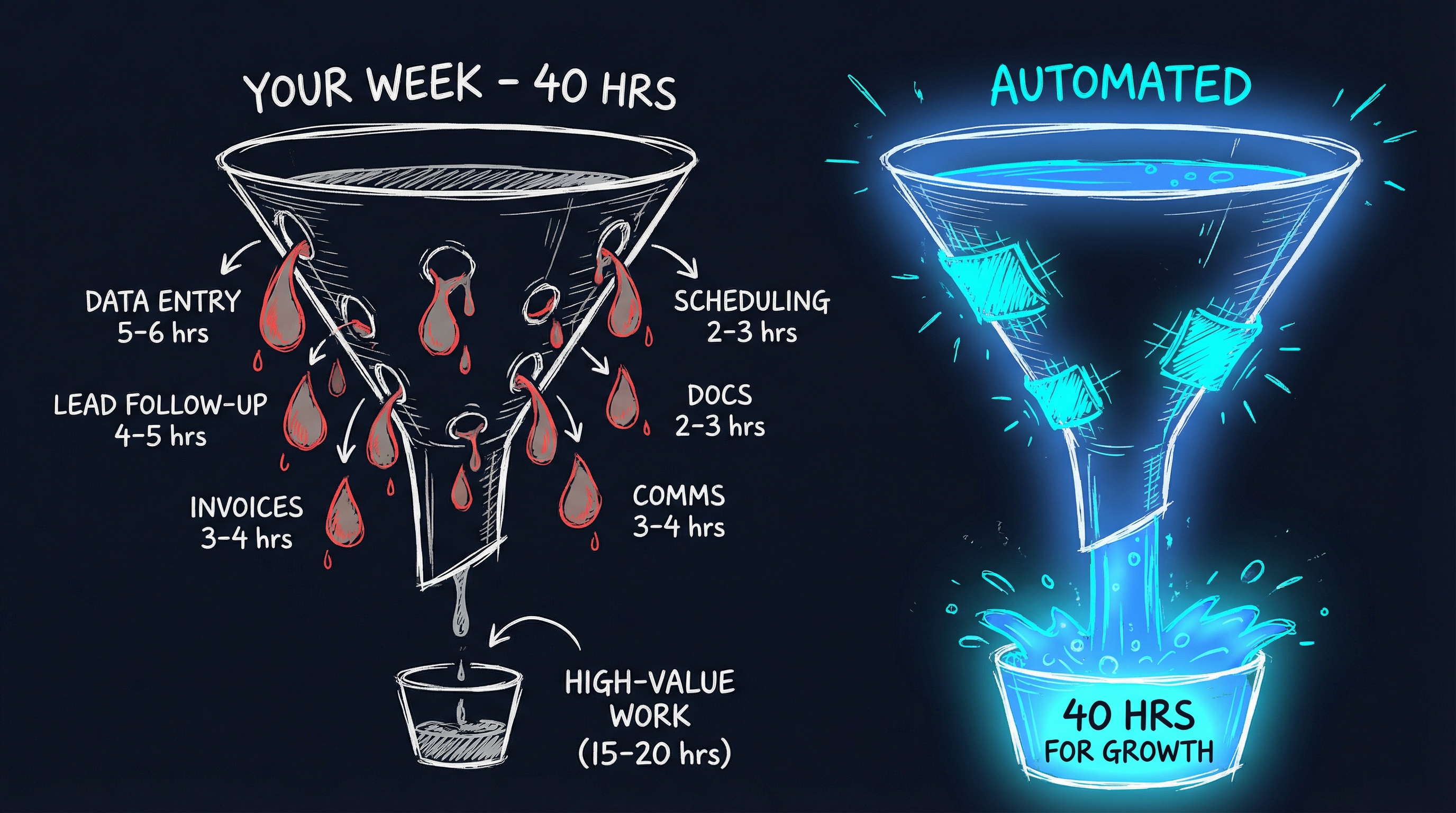
Before Automation (typical small contractor):
- 30-40% of time spent on administrative tasks
- Leads falling through cracks due to poor follow-up
- Constant scrambling to keep up with paperwork
- Stress from trying to manage everything manually
After Automation:
- 80% reduction in administrative time
- Systematic follow-up that captures more leads
- Smooth operations that practically run themselves
- Time to focus on growing the business instead of managing it
The contractors making this shift aren’t just saving time—they’re winning more business.
What Your Competitors Are Automating Right Now
Smart contractors are investing in systems that eliminate manual work across their entire operation:
Lead Management: Every inquiry gets captured, categorized, and followed up automatically. No more lost leads or forgotten callbacks.
Quote Generation: Customer information flows directly into professional quote templates. What used to take 45 minutes now takes 5.
Project Communication: Automated updates keep customers informed throughout the project. They feel taken care of without you having to remember every touchpoint.
Scheduling Optimization: Systems that coordinate customer preferences, crew availability, and material deliveries without the back-and-forth phone calls.
Financial Management: Invoices generated automatically when work is completed. Payment reminders sent on schedule. Cash flow that’s more predictable and reliable.
The contractors using these systems can handle 30-40% more volume with the same team size.
The Two Types of Markets Emerging
Market A: Contractors competing primarily on price because they can’t differentiate on service quality or speed. Margins getting squeezed. Constant stress about finding the next job.
Market B: Contractors who provide superior customer experience through systematic operations. They can charge premium prices because customers see the value in working with a “professional” company.
The difference between these markets isn’t skill or experience—it’s systems.
Why This Matters More Than You Think
Every month you operate manually while competitors automate, three things happen:
- They get faster at capturing leads while you’re still playing phone tag
- They can handle more volume with the same overhead costs
- They appear more professional to customers comparing options
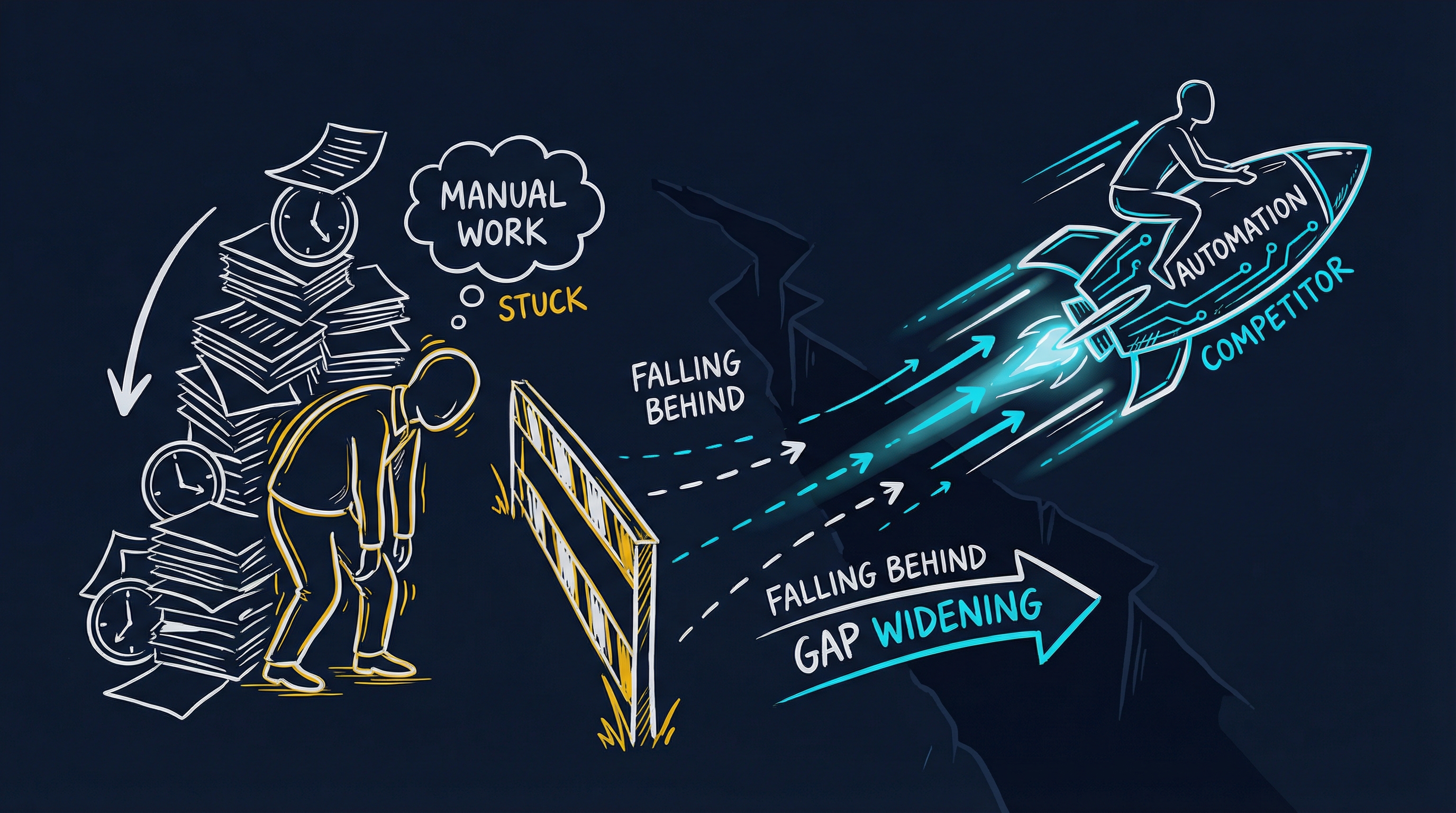
The gap compounds. A contractor who implements automation today will have a significant advantage over one who waits until next year.
The Real Cost of Staying Manual
Most contractors think about automation as an expense. But the real question is: What’s the cost of NOT automating?
- How many leads are you losing to faster competitors?
- How much time could you save on administrative work?
- How many more jobs could you handle with streamlined operations?
- What would happen to your stress level if systems handled routine tasks automatically?
If automation helps you capture just 2-3 additional jobs per month, it typically pays for the entire system investment.
Your Competitive Position
The contractors who automate in the next 6-12 months will establish market advantages that will be difficult for slower competitors to overcome.
Why? Because once customers experience working with an automated, systematized contractor, it’s hard for them to go back to companies that operate chaotically.
Superior customer experience becomes your competitive moat.
What’s Your Next Move?
You have a choice: Continue operating the way you always have while competitors gain systematic advantages, or invest in the systems that level the playing field.
The technology exists today. Small contractors are using it right now to win more business and operate more efficiently.
The question isn’t whether automation works—it’s whether you’ll implement it before or after your competitors do.
Ready to stop losing business to faster competitors? Book a 60-minute Construction Automation Strategy Session ($150, credited toward implementation) to understand exactly where automation could give you competitive advantages:
- Identify which manual processes are costing you the most time and opportunities
- Design specific systems that could streamline your operation and win more business
- Create a complete competitive advantage roadmap with exact implementation timeline
- Show you how to dominate your market through systematic operations
This is a premium consultation where you get actionable strategies to outpace your competition.
CLICK HERE TO SCHEDULE YOUR STRATEGY SESSION
The Bottom Line
Your competitors are making a choice right now: Invest in systems that create operational advantages, or hope that manual processes will continue to be competitive.
The ones who choose automation will capture more leads, handle more volume, and provide better customer experiences.
The ones who wait will find themselves competing primarily on price against companies that can afford to charge less because they operate more efficiently.
Which group will you be in six months from now?
Frequently Asked Questions
How far ahead are automated competitors really pulling?
Automated contractors respond to leads 10-20x faster, handle 40-60% more volume with the same staff, and present more professionally in every customer interaction. Over 12 months, this compounds into 30-50% revenue growth while manual competitors struggle to scale. The gap widens monthly.
What if my competitors aren’t using automation yet?
That’s your opportunity - early automation adopters in each market become the premium providers everyone else tries to catch up to. Once you’re operating faster and more professionally, competitors need 6-12 months to implement similar systems. By then, you’ve captured significant market share and customer loyalty.
Can I automate just part of my business to start?
Absolutely - starting with high-impact areas like lead response, quote generation, or customer communication is smart. Most contractors begin with 1-2 automated workflows, prove ROI, then expand. Phased implementation reduces risk while still delivering immediate competitive advantages.
Won’t automation make my business feel impersonal?
The opposite - automation handles the repetitive communication so you have more time for meaningful customer interactions. Automated updates keep customers informed between your personal touchpoints. Your business actually becomes more responsive and attentive, not less personal.
How do I know if my competitors are already using automation?
If they’re responding to leads within minutes, sending professional automated updates, and handling high project volume with small teams - they’re automated. Even if they’re not, market expectations are rising. Customers now expect fast response and proactive communication regardless of whether your competitors deliver it.
P.S. - The contractors who implement automation aren’t just working more efficiently—they’re building more valuable businesses. Systematized operations are worth more to potential buyers, create less owner dependency, and generate more predictable cash flow. Automation isn’t just about saving time; it’s about building a business that can scale and eventually run without you.
AIL-3 | AI Transparency: This article was drafted with AI assistance and reviewed, edited, and approved by the author. All recommendations are based on 20 years of experience in the roofing and construction industry.