Table of Contents
Weekly Privacy Insights
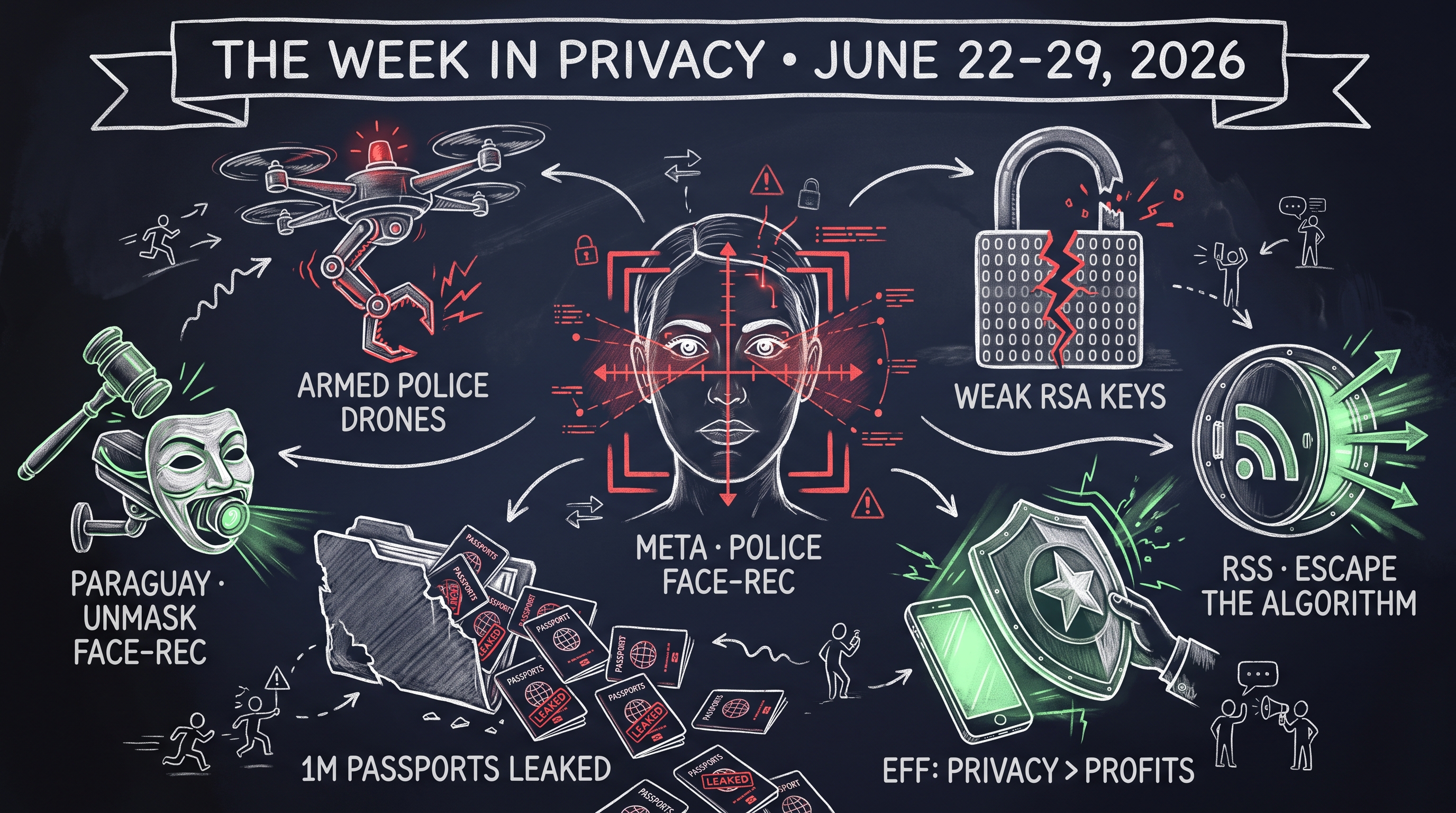
This week’s privacy news highlights concerns about weak RSA keys, facial recognition technology, and the increasing use of armed police drones. We also explore the importance of transparency in the use of face recognition in Paraguay.
Weekly Analysis / My Opinion
The past week has seen a significant focus on cryptographic vulnerabilities and the misuse of facial recognition technology. The discovery of weak RSA keys with many zeros raises concerns about the security of online transactions, while the use of facial recognition by Meta for police and military purposes highlights the need for greater transparency and regulation.
One key trend is the increasing reliance on AI-powered tools in law enforcement, which can have significant implications for individual privacy. While these tools may be marketed as efficient and effective, they often come with significant risks, including the potential for bias and misuse.
In terms of pros and cons, the use of facial recognition technology can provide valuable insights for law enforcement, but it also raises concerns about mass surveillance and the erosion of individual privacy rights. The key is to strike a balance between security and individual freedoms.
To mitigate these risks, we recommend that governments and companies prioritize transparency and accountability in their use of AI-powered tools. This includes providing clear guidelines and regulations for the development and deployment of these technologies, as well as ensuring that individuals have access to information about how their data is being used.
Featured Articles
Factoring RSA Keys with Many Zeros
A recent study has identified a new class of weak RSA keys, which can be factored using a novel algorithm. This raises concerns about the security of online transactions and highlights the need for greater vigilance in key management practices.
Meta Is Testing Facial Recognition for Police and Military
Meta is developing facial recognition technology that can be used by police and military personnel. This raises concerns about the potential for mass surveillance and the erosion of individual privacy rights.
EFF to Grindr: Put Safety and Privacy Over Profits
The Electronic Frontier Foundation (EFF) has called on the dating app Grindr to prioritize user safety and privacy. This includes implementing measures to prevent the sharing of personal data with advertisers and ensuring that users have control over their data.
One Million Passports Leaked Online
A database of almost a million passports has been leaked online, highlighting the risks associated with data breaches and the importance of robust security measures.
Additional Highlights
Robot Police Officers: A drone capable of disarming a suspect has been developed, raising concerns about the increasing use of armed police drones. Read more
The Chinese Control the Majority of Argentina’s Squid Fleet: This article highlights the growing influence of Chinese companies in various industries, including fishing and seafood processing. Read more
Hate “The Algorithm?” RSS Is One of the Tools You’ve Been Looking For: This article explores the benefits and limitations of using Really Simple Syndication (RSS) to manage online content. Read more
Lawmakers Must Act Now to Prevent Armed Police Drones: This article highlights the need for greater regulation and oversight of armed police drones, which can have significant implications for individual privacy. Read more
We Can Still Stop California’s 3D Printer Surveillance Scheme: This article explores the risks associated with a proposed mandate for 3D print surveillance software in California. Read more
EFF, TEDIC and CEJIL Challenge Secrecy in the Use of Face Recognition in Paraguay: This article highlights the importance of transparency and accountability in the use of facial recognition technology. Read more
Primed for Malware: Stop Selling Compromised Android Devices: This article explores the risks associated with compromised Android devices and highlights the need for greater regulation and oversight. Read more
Conclusion
The past week has seen a significant focus on cryptographic vulnerabilities, facial recognition technology, and the increasing use of armed police drones. As we move forward, it is essential that governments and companies prioritize transparency and accountability in their use of AI-powered tools.
Weekly Privacy Insights is a curated digest of the most important privacy and digital rights news, published every Sunday on djeditech.com.
AIL-3 | AI Transparency: This digest is AI-assisted. Articles are aggregated from RSS feeds, ranked by source authority, and summarized using a local LLM (Ollama). All content is human-curated and reviewed before publication. Original reporting belongs to the linked authors and publications.