Weekly Privacy Insights: June 1, 2026 – June 8, 2026
- Rob Pratt
- Privacy , Weekly insights
- June 8, 2026
Table of Contents
Weekly Privacy Insights
The past week has seen significant developments in the realm of privacy, with various articles shedding light on emerging threats and ongoing battles against mass surveillance. The most pressing concerns revolve around AI-powered technologies, government spying, and the increasing reliance on facial recognition.
Weekly Analysis / My Opinion
This week’s analysis reveals a concerning trend: the growing adoption of AI-powered tools by governments and corporations without adequate safeguards in place to protect individual rights. The use of generative AI for mass surveillance purposes poses significant risks to civil liberties, as highlighted by EFF Senior Policy Analyst Dr. Matthew Guariglia during his testimony before Congress.
The reliance on facial recognition technology also raises red flags, particularly with Meta’s deployment of this feature in their always-on surveillance glasses. This invasive capability has the potential to turn customers into a distributed surveillance machine, further eroding our right to privacy.
In response to these emerging threats, it is essential that we prioritize transparency and accountability. Governments must adopt strong safeguards to protect Constitutional rights, while corporations should be held accountable for their use of AI-powered tools.
Featured Articles
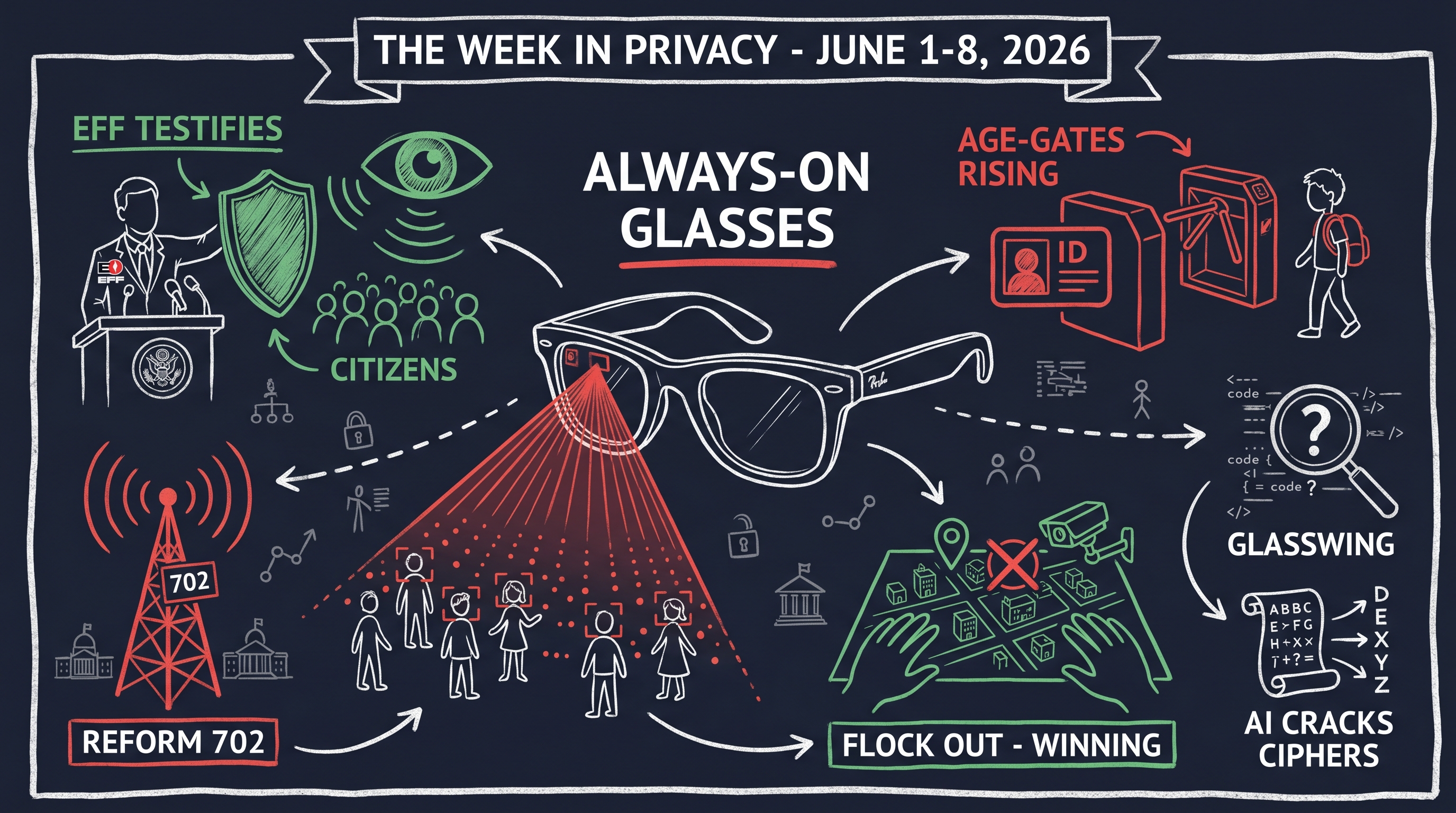
Anthropic’s Project Glasswing Update: In a recent update on their Project Glasswing initiative, Anthropic has reported finding numerous vulnerabilities in software, but the lack of transparency and refusal to release details raises concerns about the project’s true intentions. Read more
Internet Age-Gates Are a Growing Global Threat: Governments worldwide are introducing legislation requiring online users to verify their ages, with Australia’s ban on social media for under-16s being a prime example. This approach is reckless and short-sighted, as highlighted by EFF. Read more
AI Used to Decrypt Medieval Ciphers: Researchers have successfully used machine learning algorithms to decrypt historical pencil-and-paper ciphers, demonstrating the potential of AI in cryptography. Read more
EFF Testifies to Congress on Protecting Americans’ Rights from Government AI: EFF Senior Policy Analyst Dr. Matthew Guariglia testified before Congress, emphasizing the need for strong safeguards to protect Constitutional rights in the face of emerging AI technologies. Read more
Additional Highlights
LGBT Q&A Season 1 Recap: Staying Safer Online: EFF’s LGBT Q&A series provides valuable insights into staying safe online, including tips for dating and navigating social media. Read more
California’s AB 412 Still Demands Developers Do The Impossible: EFF continues to oppose California’s A.B. 412, which requires AI developers to identify and disclose copyrighted works used in training generative AI systems. Read more
Pulte Appointment Underscores Need to Reform Section 702 Spying: The appointment of Bill Pulte as acting Director of National Intelligence highlights the need for reform in government surveillance practices. Read more
Move Fast, Surveil Things: Meta’s deployment of facial recognition code in their always-on surveillance glasses raises concerns about the erosion of our right to privacy. Read more
Hacking Meta’s AI Chatbot: Researchers have demonstrated the vulnerability of Meta’s AI chatbot, highlighting the need for stronger security measures in AI-powered tools. Read more
We’re Fighting Mass Surveillance Tech—and Winning: EFF is on the front lines of the fight against mass surveillance, with victories like the DeFlock.me campaign highlighting the power of grassroots advocacy. Read more
Conclusion
The past week has seen significant developments in the realm of privacy, with emerging threats and ongoing battles against mass surveillance. As we move forward, it is essential that we prioritize transparency and accountability, ensuring that individual rights are protected in the face of emerging technologies.
Weekly Privacy Insights is a curated digest of the most important privacy and digital rights news, published every Sunday on djeditech.com.
AIL-3 | AI Transparency: This digest is AI-assisted. Articles are aggregated from RSS feeds, ranked by source authority, and summarized using a local LLM (Ollama). All content is human-curated and reviewed before publication. Original reporting belongs to the linked authors and publications.