Table of Contents
Weekly Privacy Insights
The past week has seen significant developments in the world of privacy, with a mix of positive and concerning trends. The introduction of new technologies and policies raises important questions about their impact on individual rights and freedoms.
Weekly Analysis / My Opinion
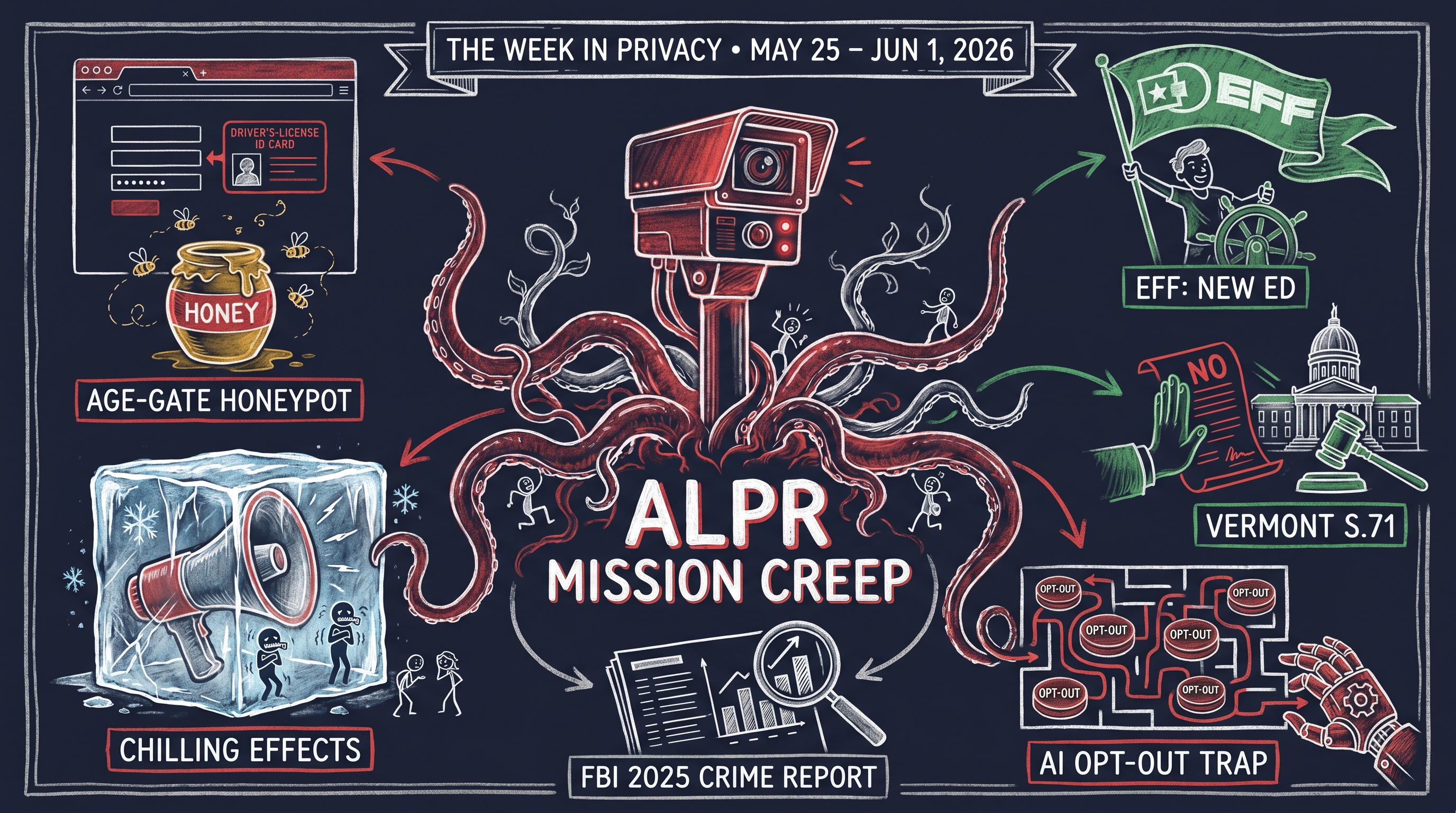
One key trend emerging from this week’s news is the increasing use of surveillance technologies, such as license plate readers (ALPRs) and WiFi sensing. While these tools can be useful for law enforcement, they also raise concerns about mission creep and the potential for abuse. As we’ve seen in the past, the absence of robust regulations and oversight can lead to a culture of unrestricted access to sensitive location data.
Another trend worth noting is the growing awareness of the need for better age verification systems online. While this may seem like a positive development, it’s essential to recognize that every online age verification scheme has the same result: users are forced to reveal sensitive personal information to third parties simply to access the web. This can lead to a honeypot of private info ripe for bad actors.
In terms of policy developments, we’ve seen some concerning legislation in Vermont, which undermines established privacy protections for residents. It’s essential that lawmakers prioritize robust regulations and oversight to prevent the misuse of surveillance technologies and protect individual rights.
Featured Articles
1. EFF Welcomes New Executive Director Nicole Ozer: The Electronic Frontier Foundation (EFF) has welcomed a new executive director, Nicole Ozer, who brings extensive experience in privacy and surveillance law. Read more
2. Age Verification is a Privacy Nightmare: The rush to block young people from certain parts of the internet has created a privacy and security nightmare for everyone. Every online age verification scheme forces users to reveal sensitive personal information, making them an immediate target for leaks, hacks, and misuse. Read more
3. Chilling Effects: The Trump administration’s war on campus speech has led to a chilling effect, causing students to self-censor and disengage from campaign activism to avoid punitive measures. This is a concerning trend that highlights the need for robust protections against government overreach. Read more
Additional Highlights
FBI’s 2025 Internet Crime Report: The FBI has published its 2025 Internet Crime Report, which includes interesting statistics on online crime trends. Read more
More License Plate Reader Mission Creep: An EFF analysis has uncovered a troubling pattern of mission creep in the use of license plate readers (ALPRs) by law enforcement agencies. Read more
EPIC Urges Vermont Senators to Vote No on Weak ‘Privacy’ Bill: EPIC has sent a letter to Vermont’s Senators urging them to vote against S. 71, a bill that undermines established privacy protections for residents. Read more
The Indian Express: AI firms use same deceptive opt-out tactics as data brokers to confuse users, study finds: A new study suggests that major AI companies are adopting the same deceptive tactics used by data brokers and other tech firms to keep users from opting out of the sale and sharing of their personal information. Read more
Conclusion
The past week has seen a mix of positive and concerning trends in the world of privacy. As we move forward, it’s essential to prioritize robust regulations and oversight to prevent the misuse of surveillance technologies and protect individual rights.
Weekly Privacy Insights is a curated digest of the most important privacy and digital rights news, published every Sunday on djeditech.com.
AIL-3 | AI Transparency: This digest is AI-assisted. Articles are aggregated from RSS feeds, ranked by source authority, and summarized using a local LLM (Ollama). All content is human-curated and reviewed before publication. Original reporting belongs to the linked authors and publications.