Table of Contents
Weekly Privacy Insights
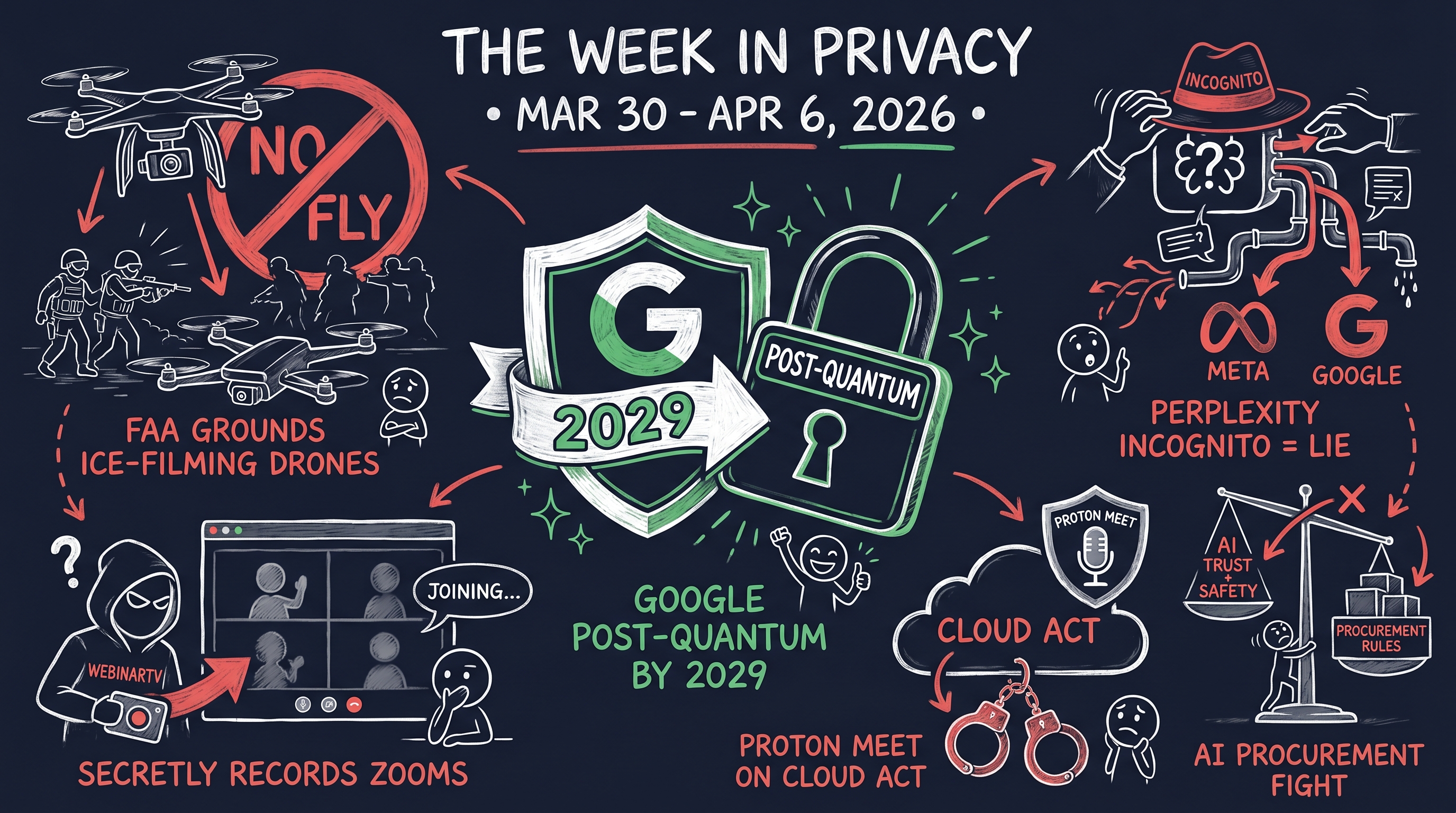
The past week has seen significant developments in the world of privacy, with key players making moves to address emerging threats and challenges. Google’s announcement to transition to post-quantum cryptography by 2029 is a step towards enhancing online security, while the FAA’s ’temporary’ flight restriction for drones raises concerns about surveillance and accountability.
Weekly Analysis / My Opinion
The trend of tech giants taking steps towards improving online security is promising. However, it’s essential to note that these efforts should not be seen as a replacement for robust regulations and laws that protect users’ rights. The FAA’s restriction on drone usage highlights the need for clear guidelines and transparency in government actions. As we move forward, it’s crucial to strike a balance between innovation and user protection.
Featured Articles
Google Wants to Transition to Post-Quantum Cryptography by 2029: Google has announced its plan to transition to post-quantum cryptography by 2029. This move is seen as a positive step towards enhancing online security, but it’s essential to note that the timeline may be ambitious given the current state of quantum computing.
The FAA’s “Temporary” Flight Restriction for Drones is a Blatant Attempt to Criminalize Filming ICE: The FAA has imposed a 21-month-long ’temporary’ flight restriction on drone usage, which raises concerns about surveillance and accountability. This move is seen as an attempt to criminalize filming of ICE activities.
Tech Nonprofits to Feds: Don’t Weaponize Procurement to Undermine AI Trust and Safety: Tech nonprofits have expressed concern over the government’s proposed rules for acquiring goods and services, which they believe will undermine AI trust and safety. The new guidelines include provisions that would make AI tools less safe and less useful.
Additional Highlights
Perplexity’s Incognito Mode Is a Lie: A class action complaint alleges Perplexity shipped complete conversation transcripts to Meta and Google, even when Incognito Mode was switched on. Read more
Double Shot of Privacy’s Defender in D.C.: EFF’s Executive Director Cindy Cohn will be discussing her new book ‘Privacy’s Defender’ at two events in Washington, D.C. on April 13 and 14.
Company that Secretly Records and Publishes Zoom Meetings: WebinarTV searches the internet for public Zoom invites, joins the meetings, secretly records them, and publishes the recordings.
Weakening Speech Protections Will Punish All of Us—Not Just Meta: EFF argues that weakening speech protections will have far-reaching consequences, affecting not just big tech companies but also ordinary users.
A Baseless Copyright Claim Against a Web Host—and Why It Failed: A law firm’s baseless copyright claim against May First Movement Technology was successfully defended by EFF.
Proton Meet Isn’t What They Told You It Was: Proton built Proton Meet on CLOUD Act infrastructure, which raises concerns about user data protection.
Conclusion
The past week has seen significant developments in the world of privacy. While there are promising efforts towards improving online security, it’s essential to note that these efforts should not be seen as a replacement for robust regulations and laws that protect users’ rights. As we move forward, it’s crucial to strike a balance between innovation and user protection.
Weekly Privacy Insights is a curated digest of the most important privacy and digital rights news, published every Sunday on djeditech.com.
AIL-3 | AI Transparency: This digest is AI-assisted. Articles are aggregated from RSS feeds, ranked by source authority, and summarized using a local LLM (Ollama). All content is human-curated and reviewed before publication. Original reporting belongs to the linked authors and publications.