Table of Contents
Weekly Privacy Insights
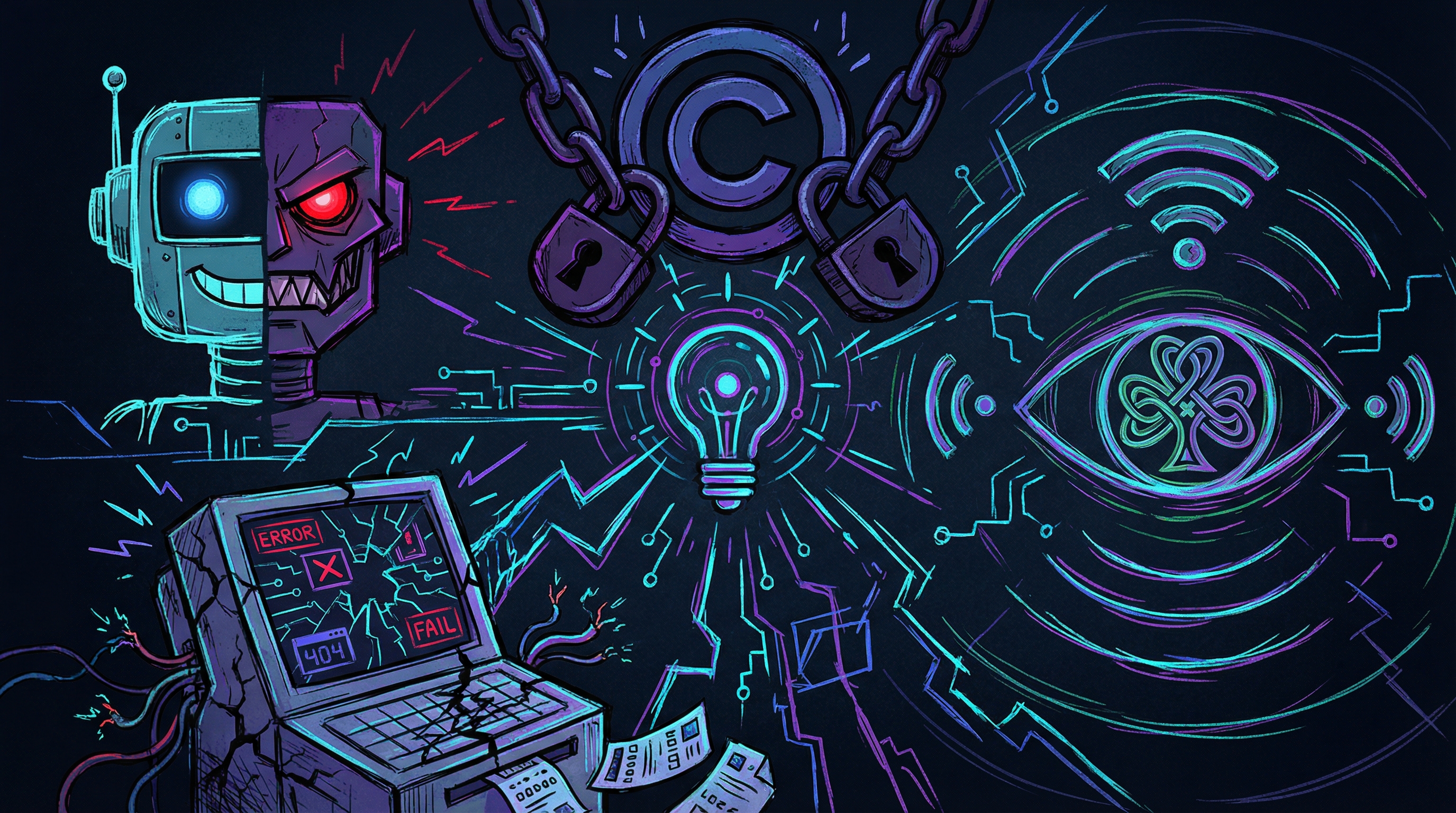
This week’s privacy news highlights critical issues from expanding government surveillance powers to the evolving challenges AI presents to cybersecurity and copyright law. We also see ongoing debates around copyright’s impact on creativity and monopoly, along with persistent concerns about internet voting security.
Weekly Analysis / My Opinion
This week reveals an ongoing tension between innovation, security, and control in digital spaces. Ireland’s proposed law to expand police surveillance — including intercepting encrypted communications and spyware use — raises serious questions about privacy rights and government overreach. We must carefully weigh law enforcement needs against fundamental privacy protections.
Meanwhile, advances in AI show both promise and peril. AI’s ability to autonomously find and exploit cyber vulnerabilities demonstrated in recent tests highlights the urgent need for robust security practices like patching and monitoring. Concurrently, the vulnerabilities of large language models to prompt injection attacks remind us that current AI safety mechanisms are insufficient, requiring new strategies inspired by human judgment and layered defenses.
Copyright continues to be a flashpoint, with articles from the Electronic Frontier Foundation (EFF) underscoring how outdated laws and expanding monopolies suppress creativity rather than foster it. The persistence of “rent-only” digital copyright cultures restricts user rights and the first sale doctrine, while statutory damages regimes fuel chilling effects on online speech. Importantly, courts’ recognition of fair use as protecting automated analysis offers a legal framework to defend AI training and data-driven innovation.
Finally, the reaffirmation by security experts that internet voting remains insecure underscores the challenges of balancing accessibility and election integrity.
Pros: These discussions encourage transparency, highlight essential protections, and spur calls for reform in copyright and security policies.
Cons and Risks: Expanding surveillance powers risk eroding civil liberties; AI-powered attacks threaten infrastructure; copyright monopolies can restrict creativity and competition; and insecure voting technologies threaten democracy.
Recommended Actions:
- Advocate for privacy-respecting limits on surveillance.
- Prioritize cybersecurity hygiene, especially patch management.
- Support balanced copyright reforms that protect both creators and users.
- Develop stronger AI safety frameworks beyond simple prompt filtering.
- Reject insecure electronic voting in favor of proven secure methods.
Featured Articles
Ireland Proposes Giving Police New Digital Surveillance Powers
The Irish government plans to broaden police capabilities to intercept encrypted communications and to authorize spyware use, raising vital privacy concerns around digital surveillance. Read more
AIs are Getting Better at Finding and Exploiting Internet Vulnerabilities
Anthropic’s evaluations reveal AI models are increasingly able to autonomously execute complex cyberattacks using only standard tools, emphasizing the need for proactive security patching and preparedness. Read more
Search Engines, AI, And The Long Fight Over Fair Use
The EFF details the longstanding legal recognition that automated copying for analysis, indexing, and AI training constitutes fair use, a vital principle protecting innovation and the open internet against overly restrictive copyright claims. Read more
Why AI Keeps Falling for Prompt Injection Attacks
Large language models remain vulnerable to prompt injection, where crafted inputs bypass safety guardrails. This article explains the limits of current defenses and suggests inspiration from human judgment to develop stronger protections. Read more
Internet Voting is Too Insecure for Use in Elections
Prominent security experts reaffirm that no current or foreseeable technology can secure internet voting, warning against misleading claims and underscoring risks to democratic processes. Read more
Additional Highlights
Rent-Only Copyright Culture Makes Us All Worse Off
Examines how digital rental models weaken traditional user rights like resale and lending, challenging legacy copyright laws to catch up with new media consumption. Read moreCopyright Kills Competition
Highlights how copyright consolidation empowers gatekeepers at the expense of creators and competition, calling for systems that support grassroots innovation. Read moreCopyright Should Not Enable Monopoly
Discusses how copyright’s monopoly rights have contributed to a creativity crisis by enabling media consolidations that suppress original content. Read moreStatutory Damages: The Fuel of Copyright-based Censorship
Explores how unpredictable and excessive statutory damages lead platforms and users to over-censor content, chilling free expression online. Read more💾 The Worst Data Breaches of 2025—And What You Can Do | EFFector 38.1
A review of major data breaches and practical recommendations to protect personal data, with insights on ICE surveillance countermeasures. Read moreFriday Squid Blogging: Giant Squid in the Star Trek Universe
A lighter, community-focused post offering space for discussing unreported security stories. Read more
Privacy and digital rights remain contested terrain in 2026. Staying informed, advocating for balanced policies, and practicing vigilant cybersecurity remain critical for individuals and societies alike.