Table of Contents
The Speed Gap: What MIT and Harvard Discovered About Winning Construction Jobs
The research that explains why you’re losing jobs to competitors who aren’t even better than you
MIT studied over 100,000 web-generated sales leads. Harvard Business Review analyzed 2.24 million leads across industries. RapidWire tracked thousands of field service calls.
They all found the same thing: Speed wins. Everything else is secondary.
If you’ve ever lost a job to a competitor and couldn’t figure out why—they weren’t cheaper, they weren’t more experienced, the customer even seemed to like you—this research explains it.
The Research
The MIT Lead Response Management Study, led by James Oldroyd, analyzed how companies respond to web-generated leads and what happens to conversion rates based on response time. The study tracked over 100,000 lead-to-contact attempts across multiple industries.
Harvard Business Review published complementary findings in 2011, examining 2.24 million leads handled by 2,241 companies. Their focus: how quickly companies respond and what that means for qualification rates.
RapidWire’s field service analysis brought this into the trades specifically, tracking response times and win rates in home services and construction.
The findings are consistent across all three: the speed gap between winners and losers is measured in minutes, not hours.
The Numbers
Here’s what the research actually shows:
Industry average response time: 42-47 hours
That’s not a typo. The average business takes nearly two full days to respond to a lead. In construction and field services, it’s often worse—because you’re on job sites, not watching your phone.
First responder wins: 78% of the time
RapidWire’s data shows the first contractor to respond wins 78% of jobs. Not the cheapest. Not the most experienced. The first.
5 minutes vs. 30 minutes: 21x advantage
MIT’s research found that responding within 5 minutes makes you 21 times more likely to qualify the lead compared to responding at 30 minutes. Twenty-one times.
After 5 minutes: Qualification drops 80%
The MIT study shows qualification odds drop by 80% after the first five minutes. The lead isn’t necessarily gone—but they’re probably already talking to someone else.
1-minute response: 391% higher conversion
RapidWire found that responding within 60 seconds produces 391% higher conversion rates compared to delayed responses. Not 39%. Three hundred ninety-one percent.
After 1 hour: 7x less likely to qualify
Harvard’s research shows that waiting just one hour makes you 7 times less likely to qualify the lead compared to responding within the first hour.
The Math
Let’s make this concrete for a construction business.
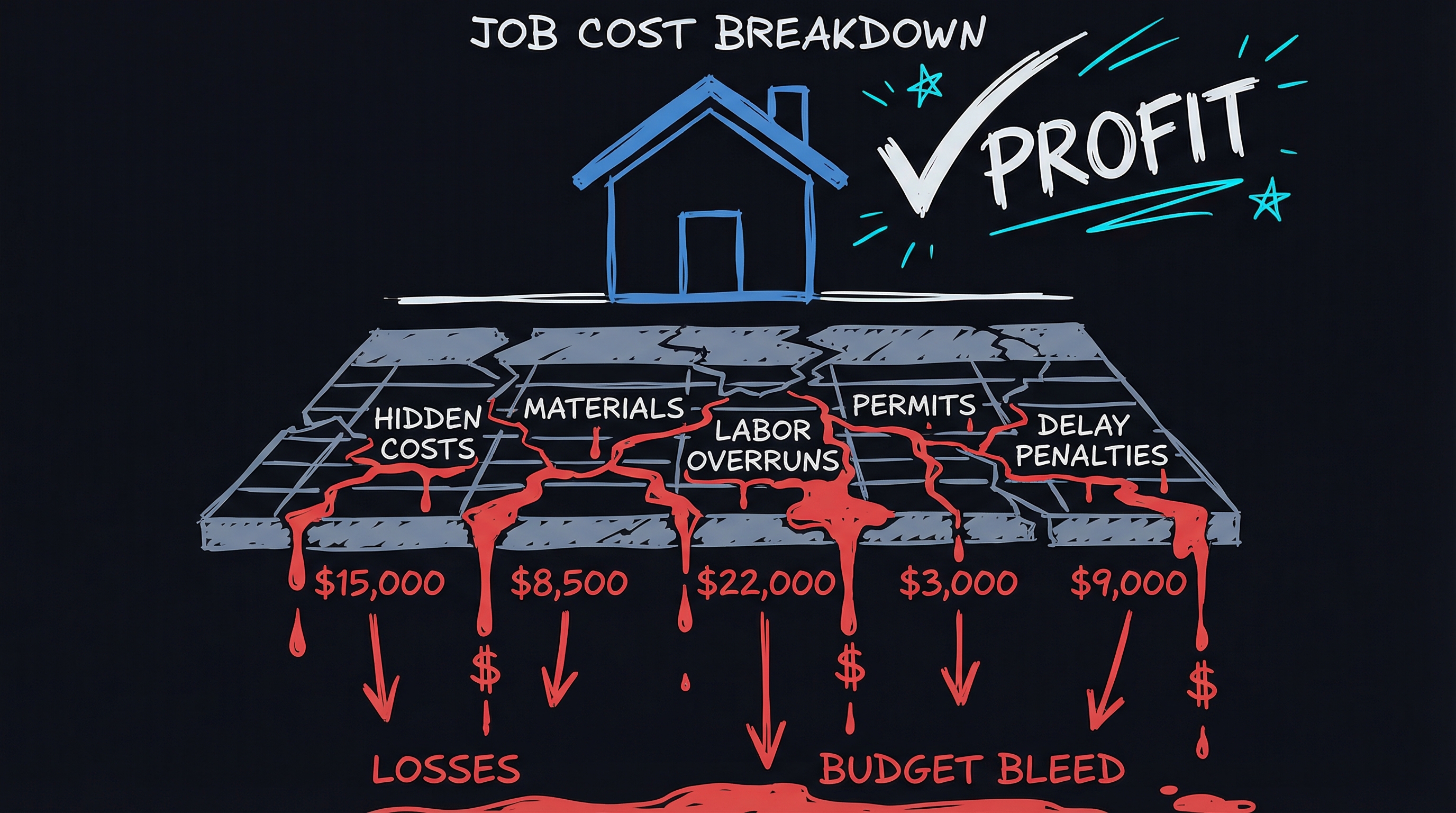
Say you miss 5 leads per week because you couldn’t respond fast enough. Not because you ignored them—because you were on a roof, in a crawl space, or driving between jobs.
At an average job value of $3,000:
5 leads × $3,000 × 52 weeks = $780,000 per year
That’s not $780,000 in potential revenue. That’s $780,000 going to the competitor who answered first.
Even if you’re only missing 1 lead per week:
1 lead × $3,000 × 52 weeks = $156,000 per year
That’s a full-time employee’s salary. Lost to response time.
Why This Happens
Most contractors think they respond “fast enough.”
When a lead comes in at 10 AM and you call back at 2 PM, that feels reasonable. You were working. You got to it same-day. That’s better than most.
But here’s what happened in those four hours:
- The homeowner submitted requests to 3-4 contractors
- One of them had a system that responded in 60 seconds
- By the time you called at 2 PM, they’d already had a conversation
- The homeowner says “Thanks, but we’re already talking to someone”
You didn’t lose on price. You didn’t lose on experience. You lost on timing.
The MIT research calls this the “first mover advantage”—and in sales, being first isn’t a slight advantage. It’s often the only advantage that matters.
What Changes This
The contractors winning 78% of first-responder jobs aren’t sitting by their phones. They have systems that respond automatically.
When a lead comes in:
- Instant acknowledgment (within 60 seconds)
- Basic qualification questions captured
- Appointment scheduling offered immediately
- You get notified with context, not just “someone called”
By the time you’re available to talk, the lead is already engaged, already qualified, and already has you mentally positioned as “the responsive one.”
This isn’t about working harder. It’s about having systems that work when you can’t.
The Bottom Line
The research is clear:
- 42-47 hours is the industry average response time
- 78% of jobs go to the first responder
- 21x advantage for 5-minute response vs. 30-minute
- 391% higher conversion with 60-second response
You’re not competing on price, quality, or experience as much as you think you are. You’re competing on speed—and most contractors don’t even know it.
The gap between winners and losers isn’t talent. It’s timing.
Ready to close the speed gap?
Book a 60-Minute Strategy Session →
We’ll map your current lead response workflow, identify where you’re losing to faster competitors, and design a system that responds in seconds—not hours. $150, credited toward implementation.
Sources
- MIT Lead Response Management Study (Oldroyd et al.)
- Harvard Business Review: The Short Life of Online Sales Leads (2011)
- RapidWire: Lead Response Time in Field Service
- Chili Piper: Speed-to-Lead Statistics
The data doesn’t lie. Speed wins.
AIL-3 | AI Transparency: This article was drafted with AI assistance and reviewed, edited, and approved by the author. All recommendations are based on 20 years of experience in the roofing and construction industry.