Table of Contents
The Hidden Cost of “Where’s the Info?” Questions
How scattered information chaos is costing you 8-12 hours weekly
The Friday Afternoon Panic
It’s 3:45 PM on Friday and your crew is at the Morrison Street job site. The electrical inspector just showed up early, and your foreman calls asking for the permit approval documents.
“Check your email from Tuesday,” you say, scrolling through your inbox trying to remember which thread it was in.
Five minutes later: “Not there. Maybe it’s in the project folder?”
You check Dropbox. Then Google Drive. Then remember you might have texted it. Or was it in that WhatsApp group? Maybe filed in the physical folder back at the office?
Meanwhile, your crew is standing around waiting, the inspector is getting impatient, and you’re frantically searching through six different places trying to find a document you KNOW you have somewhere.
Sound familiar? This exact scenario is playing out in construction businesses hundreds of times every single week.
The Real Cost of “Where Is…?” Questions
Here’s what most contractors don’t calculate: Every “where is the info for X project?” question costs 15-20 minutes of productive time.
Let’s break down what actually happens:
- Office manager stops current work (3 minutes lost)
- Searches through texts, emails, multiple cloud drives (8 minutes)
- Sometimes can’t find it, asks you or someone else (additional 5 minutes)
- Refocuses on original task (4 minutes)
- Total cost: 20 minutes per question
Now multiply that by reality:
- Average small contractor (5-10 employees): 15-20 “where is” questions daily
- Total weekly time waste: 25-33 hours across the whole team
- Annual cost at $27/hour blended rate: $35,100-$46,332
And that’s just the direct time cost. The downstream effects are far worse.
The Domino Effect Nobody Tracks
When your team can’t quickly find project information, three expensive problems compound:
Problem 1: Project Delays From Missing Information
Your crew arrives at a job site without the correct supplier quote. They order materials based on memory, get the wrong dimensions, and now the job is delayed two days while you wait for redelivery.
Cost: 2-3 days per month in preventable delays = $8,000-$15,000 annually
Problem 2: Customer Confusion From Inconsistent Information
Your sales guy quotes a price based on an outdated estimate. Your project manager gives the customer a different timeline because he’s looking at last week’s schedule. The customer calls asking why nobody seems to know what’s going on.
Cost: Perceived disorganization leading to 20-30% fewer referrals
Problem 3: Competitive Disadvantage From Slow Response
A customer calls asking for warranty information on their 2023 roof installation. You promise to “look it up and call them back.” Two days later you still haven’t found it, and they’re already calling your competitor.
Cost: Lost repeat business and damaged reputation
What Organized Contractors Do Differently
Here’s the transformation that changes everything:
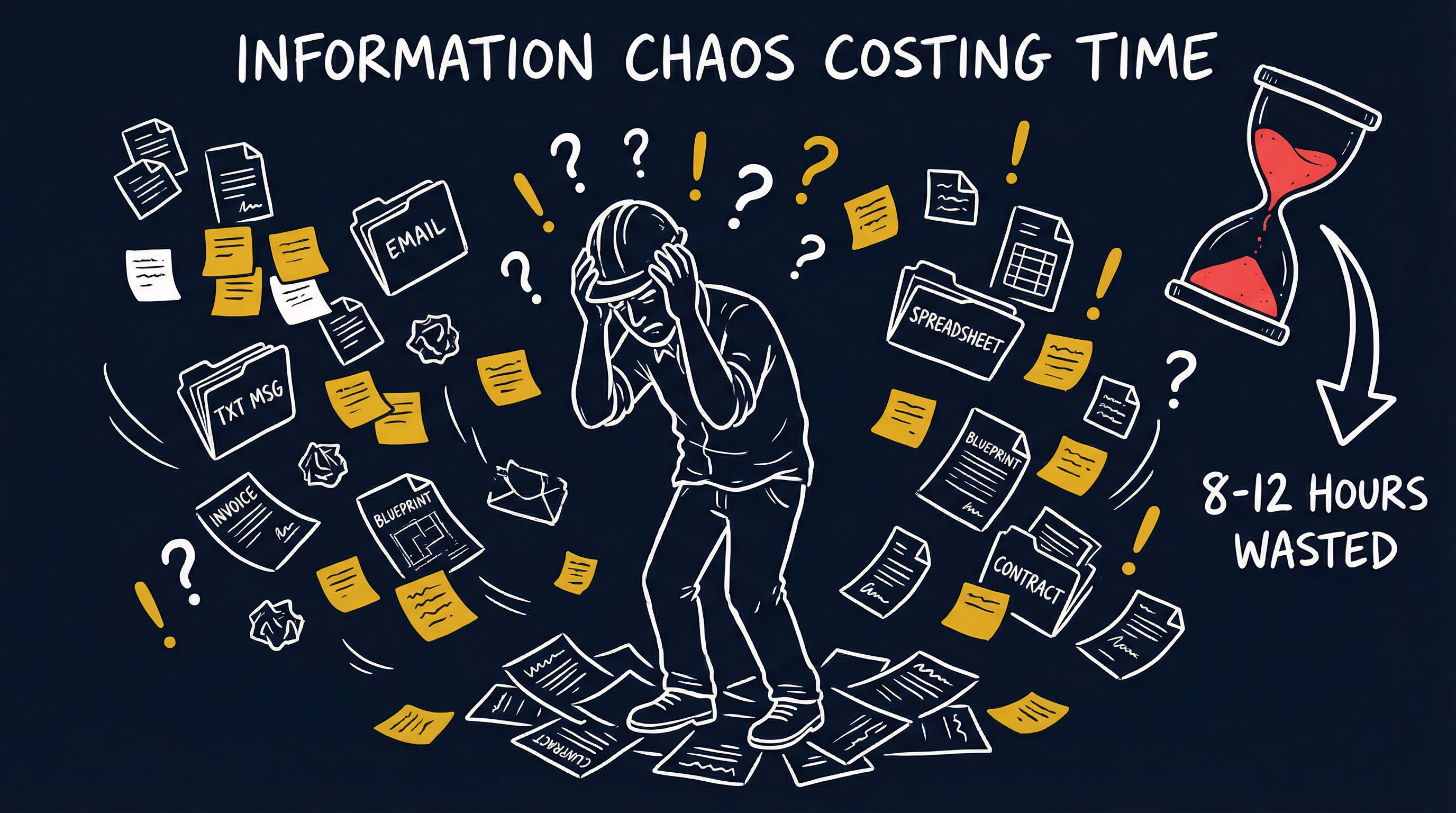
Scattered Information Reality (What You’re Doing Now):
- Project documents in email attachments
- Photos scattered across team members’ phones
- Quotes saved to random desktop folders
- Permit info texted in various threads
- Specs written on paper at job sites
- Customer preferences remembered (maybe) by whoever talked to them last
Result: 8-12 hours weekly searching for information that exists somewhere
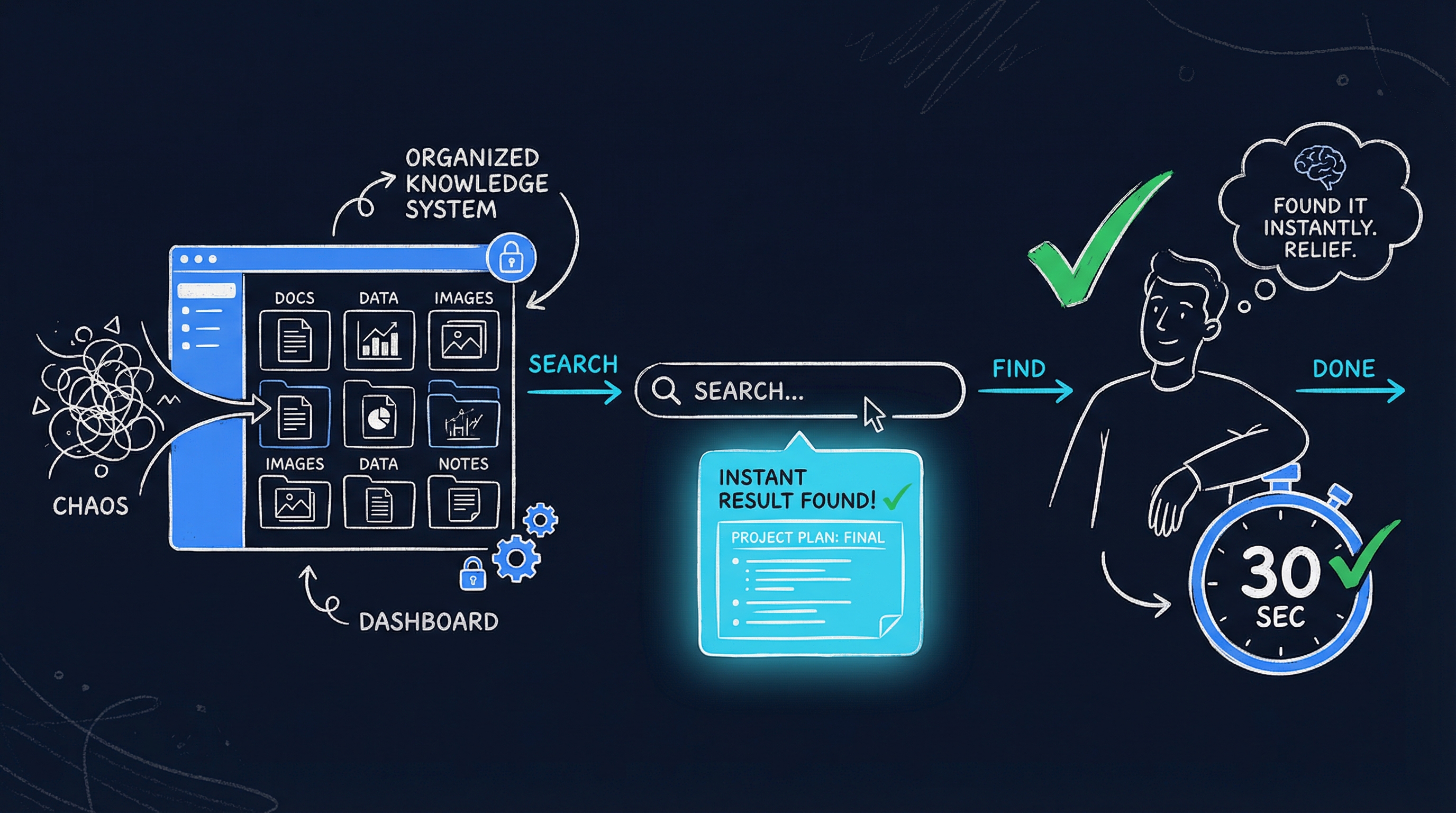
Centralized Automated Reality (What’s Possible):
- Every document auto-files to correct project folder by date/type
- All photos automatically upload to project gallery from any phone
- Every quote, spec, permit, and change order in one searchable location
- Team members access current info instantly from field or office
- Customers see same information as team through client portal
- Version control ensures everyone has the latest specs, never outdated info
Result: Finding any project information takes 30 seconds, not 20 minutes
The Bottom Line
Conservative annual cost of scattered information: $47,000-$68,000 for a typical 5-10 employee contractor.
That’s not a technology problem. That’s a business problem hiding in plain sight.
The question isn’t whether you can afford to fix it. The question is whether you can afford not to.
Next: From Information Chaos to 30-Second Access - How centralized automation eliminates “where is” questions permanently.
P.S. - Ready to calculate what information chaos is costing YOUR business specifically? Book a 60-minute Strategy Session where we’ll map your current pain points and design a system that eliminates them permanently. $150, credited toward implementation if you proceed.
AIL-3 | AI Transparency: This article was drafted with AI assistance and reviewed, edited, and approved by the author. All recommendations are based on 20 years of experience in the roofing and construction industry.