Table of Contents
The $923K Leak: Three Places Contractors Lose Money Without Knowing It
The math behind the money you’re losing—without ever seeing it leave
You’re not bad at business. Your crews are skilled. Your work quality is solid. But somewhere between “lead comes in” and “check clears,” money is disappearing.
It’s not theft. It’s not bad pricing. It’s invisible leaks that most contractors don’t even know exist.
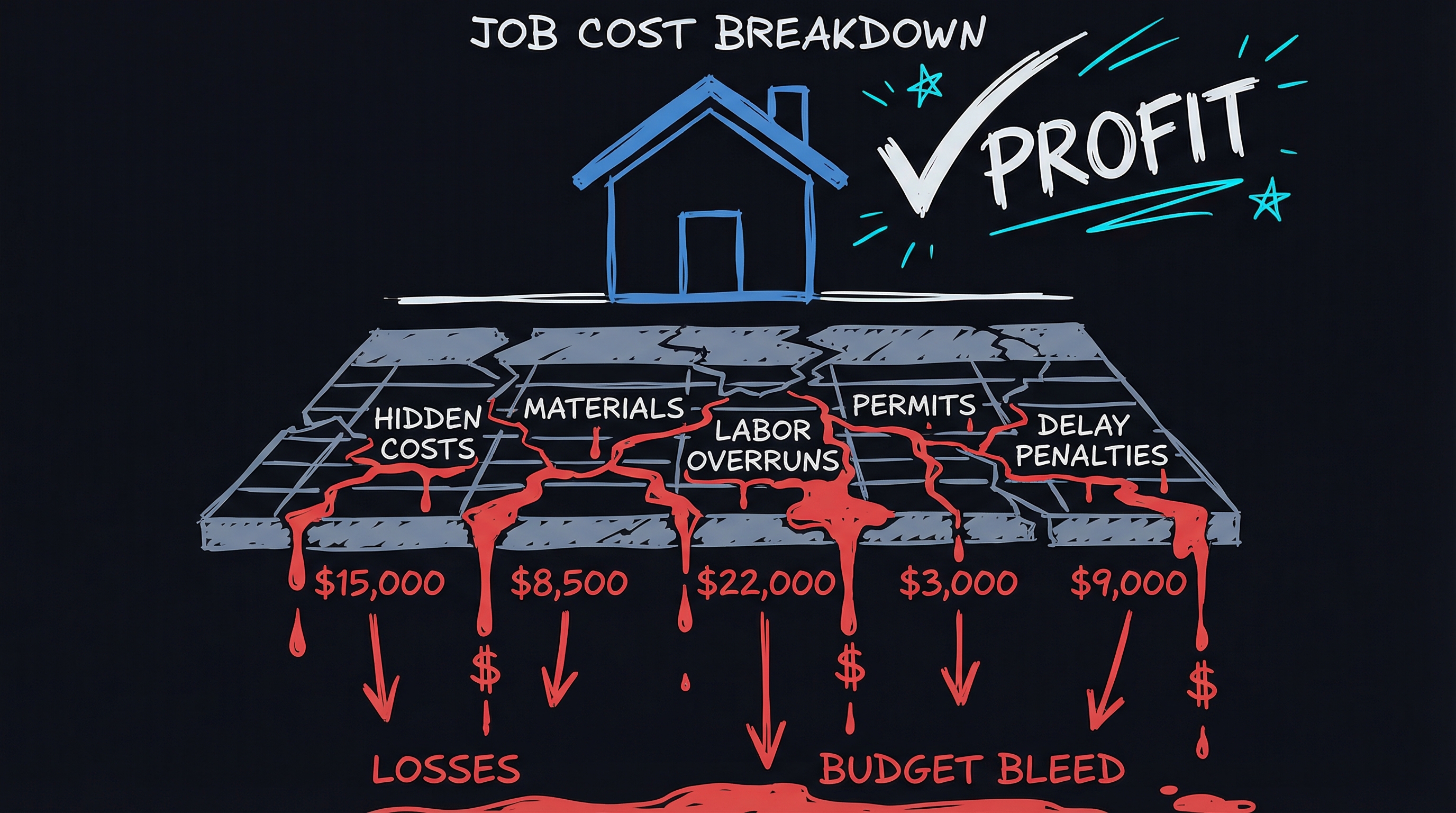
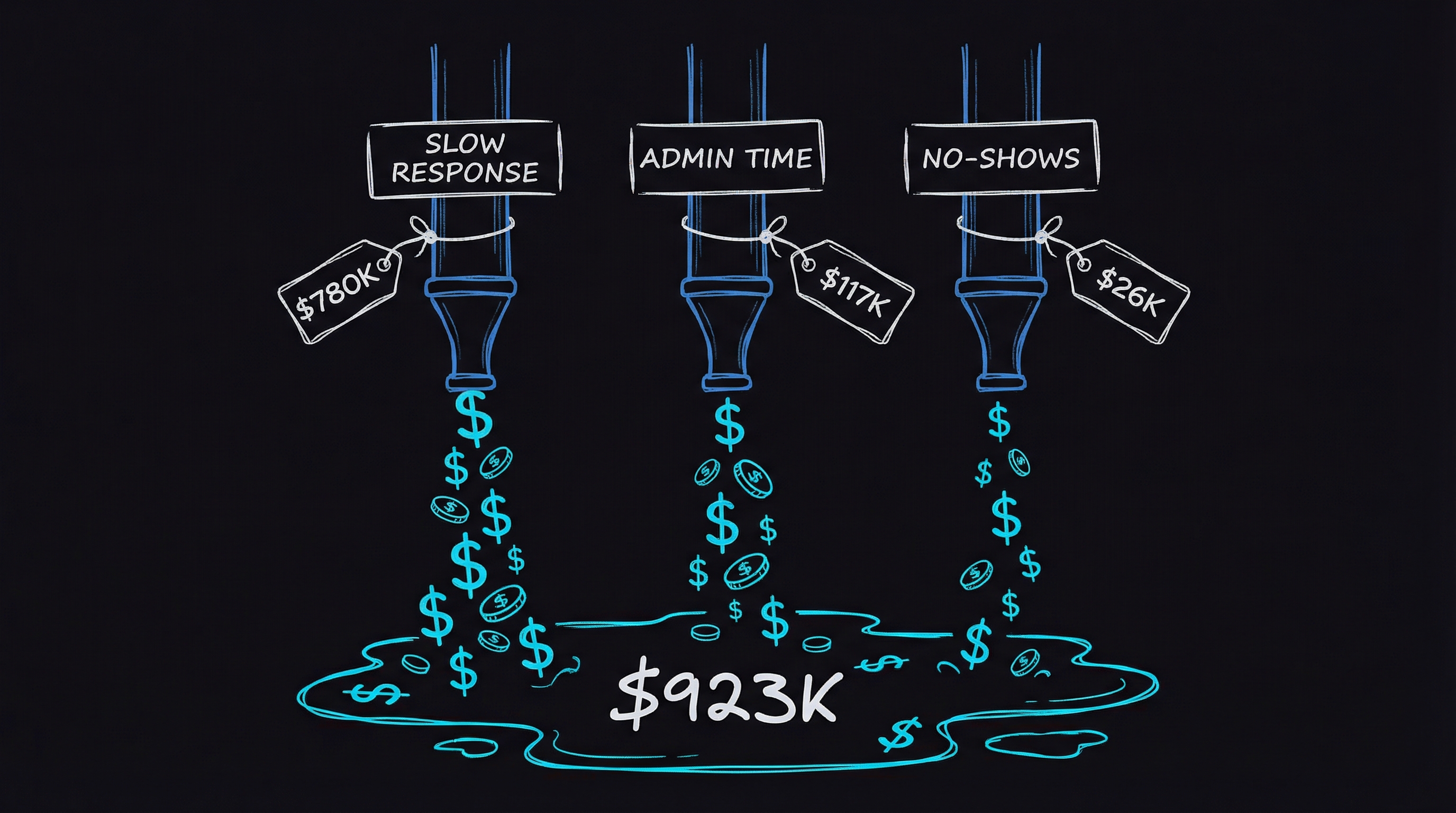
Add them up: $923,000 per year for a typical mid-sized contractor.
Here’s where it goes.
Leak #1: Slow Lead Response — $780,000
The math:
- 5 leads per week lost to faster competitors
- Average job value: $3,000
- 5 × $3,000 × 52 weeks = $780,000/year
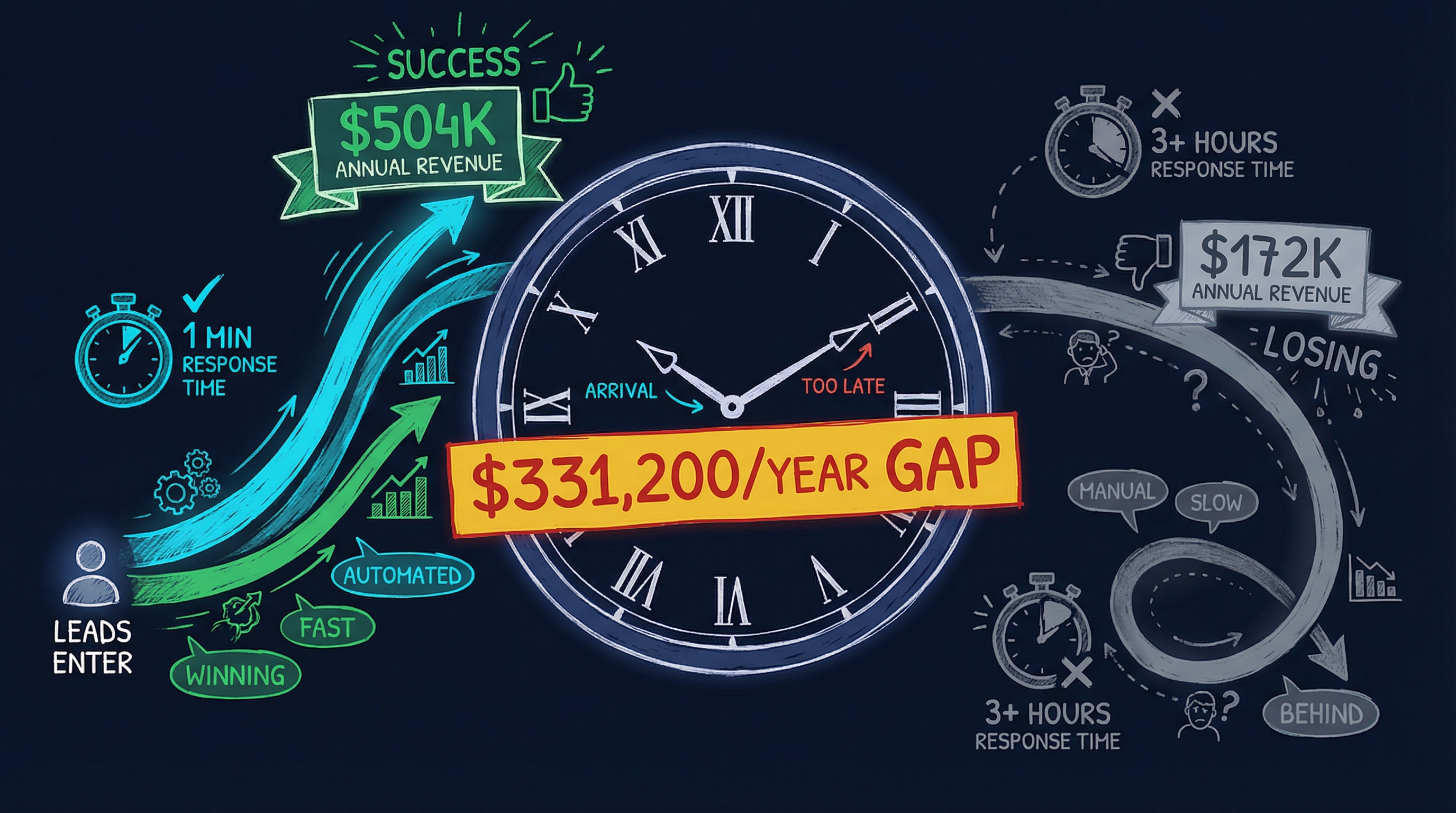
This isn’t hypothetical. MIT research shows responding within 5 minutes makes you 21x more likely to win the job. After 5 minutes, qualification odds drop 80%.
The first contractor to respond wins 78% of jobs (RapidWire). Not the cheapest. Not the best. The first.
Industry average response time? 42-47 hours.
You’re on a roof. A lead comes in at 10 AM. You call back at 2 PM. Reasonable, right?
But in those 4 hours, a competitor with a 60-second response system already had a conversation, scheduled an estimate, and positioned themselves as “the responsive one.”
You lost a $3,000 job because you were doing $3,000 work.
Leak #2: Administrative Overhead — $117,000
The math:
- 15 hours/week on admin tasks
- $150/hour opportunity cost
- 15 × $150 × 52 weeks = $117,000/year
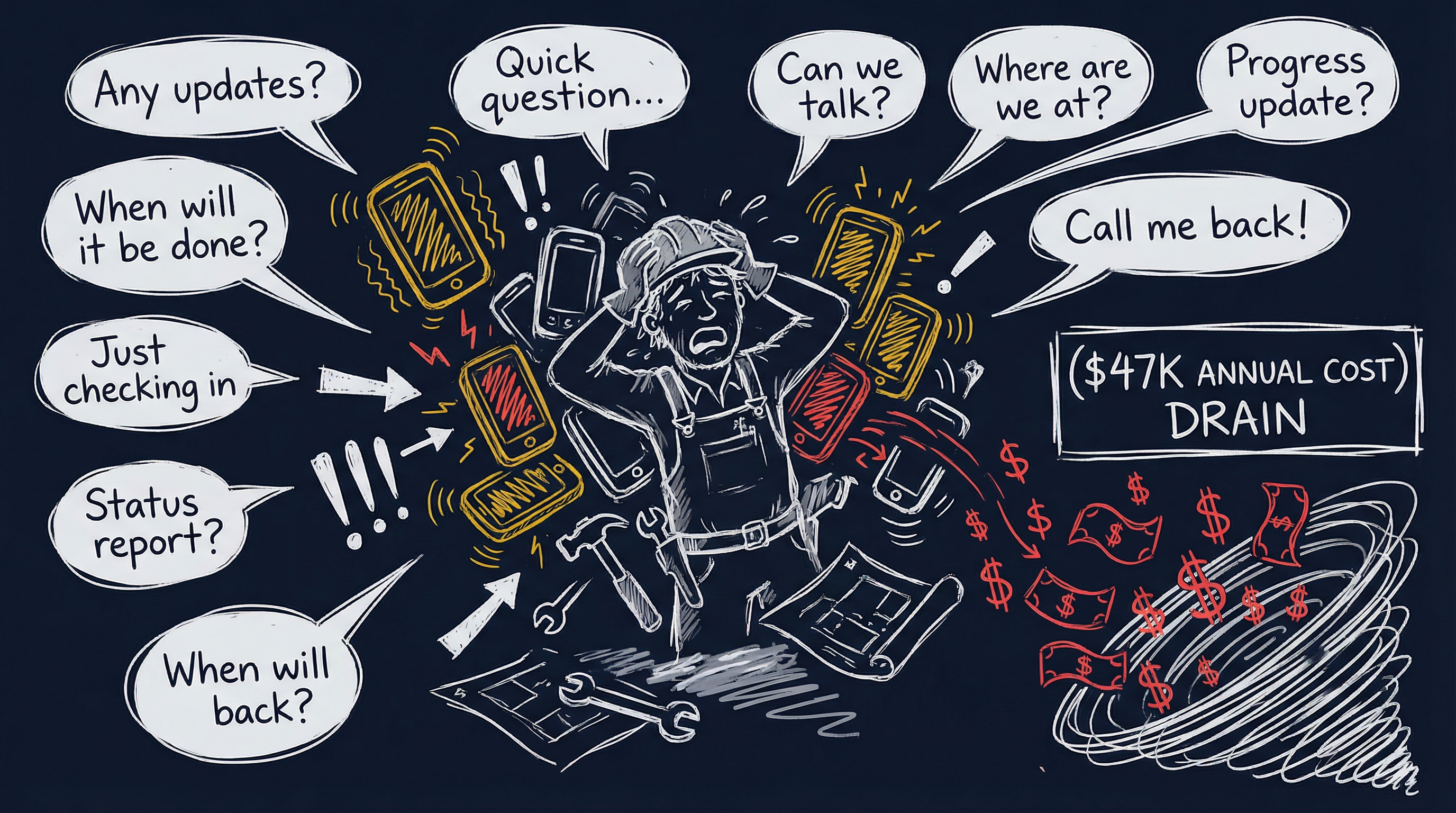
Research from Levelset found that 75% of construction workers spend less than half their time on actual construction work. The rest? Paperwork. Phone tag. Scheduling. Chasing payments.
A Time etc survey found entrepreneurs spend 36% of their work week—about 16 hours—on administrative tasks.
For a contractor who could be billing $150/hour on skilled work, that’s $117,000/year spent on tasks that don’t generate revenue.
This isn’t about working harder. It’s about the difference between:
- Manually scheduling appointments vs. automated booking
- Chasing down payments vs. automated invoicing
- Copying info between systems vs. data that flows automatically
Every hour of admin is an hour of billable work you’re not doing.
Leak #3: No-Shows and Scheduling Chaos — $26,000
The math:
- 2.5 no-shows per week (at 15-30% industry rate)
- $200 cost per no-show (drive time, prep, lost slot)
- 2.5 × $200 × 52 weeks = $26,000/year
Industry no-show rates run 15-30% (TrueLark). Without automated reminders, you’re at the high end of that range.
Each no-show costs more than the missed appointment:
- Drive time to the job (you already left)
- Prep time (materials loaded, schedule blocked)
- Opportunity cost (that slot could have been a paying customer)
- Mental tax (frustration, schedule scrambling)
Studies show automated reminders reduce no-shows by 32-65% (MGMA). A text message sequence at 48 hours, 24 hours, and morning-of transforms your show rate.
The Total: $923,000
| Category | Annual Loss |
|---|---|
| Slow lead response | $780,000 |
| Admin overhead | $117,000 |
| No-shows | $26,000 |
| Total | $923,000 |
These aren’t dramatic failures. No single incident screams “you just lost $923,000.” It’s death by a thousand cuts—5 lost leads here, 15 admin hours there, a couple no-shows each week.
That’s why it stays invisible. Each individual leak feels minor. “Part of doing business.”
Add them up? You’re funding a competitor’s entire operation.
What Stops the Leaks
The contractors plugging these leaks aren’t working harder. They have systems doing what they can’t:
For lead response:
- Instant acknowledgment (within 60 seconds, automatically)
- Basic qualification before you’re even on the phone
- Appointment booking without back-and-forth
For admin overhead:
- Data enters once, flows everywhere
- Invoices generate from completed work
- Scheduling happens without phone tag
For no-shows:
- Automated reminder sequences
- Easy confirmation/rescheduling
- Accountability at every step
This isn’t about replacing what you do. It’s about automating what keeps you from it.
The Question
You can accept $923,000 in annual leaks as “cost of doing business.”
Or you can plug them.
The math doesn’t change whether you look at it or not. But the leaks don’t stop unless you do something about them.
Ready to see where your money’s going?
Book a 60-Minute Strategy Session →
We’ll map your current workflow, identify your biggest leaks, and show you exactly where automation stops the bleeding. $150, credited toward implementation.
Sources
- MIT Lead Response Management Study
- RapidWire: Lead Response Time Analysis
- Levelset: Construction Time Study (2020)
- Time etc: Administrative Burden Survey (2024)
- TrueLark: No-Show Rate Analysis
- MGMA: Appointment Reminder Effectiveness
$923,000 per year. That’s not a problem—that’s an opportunity.
AIL-3 | AI Transparency: This article was drafted with AI assistance and reviewed, edited, and approved by the author. All recommendations are based on 20 years of experience in the roofing and construction industry.