Table of Contents
The Privacy Principle
You can’t improve what you don’t measure.
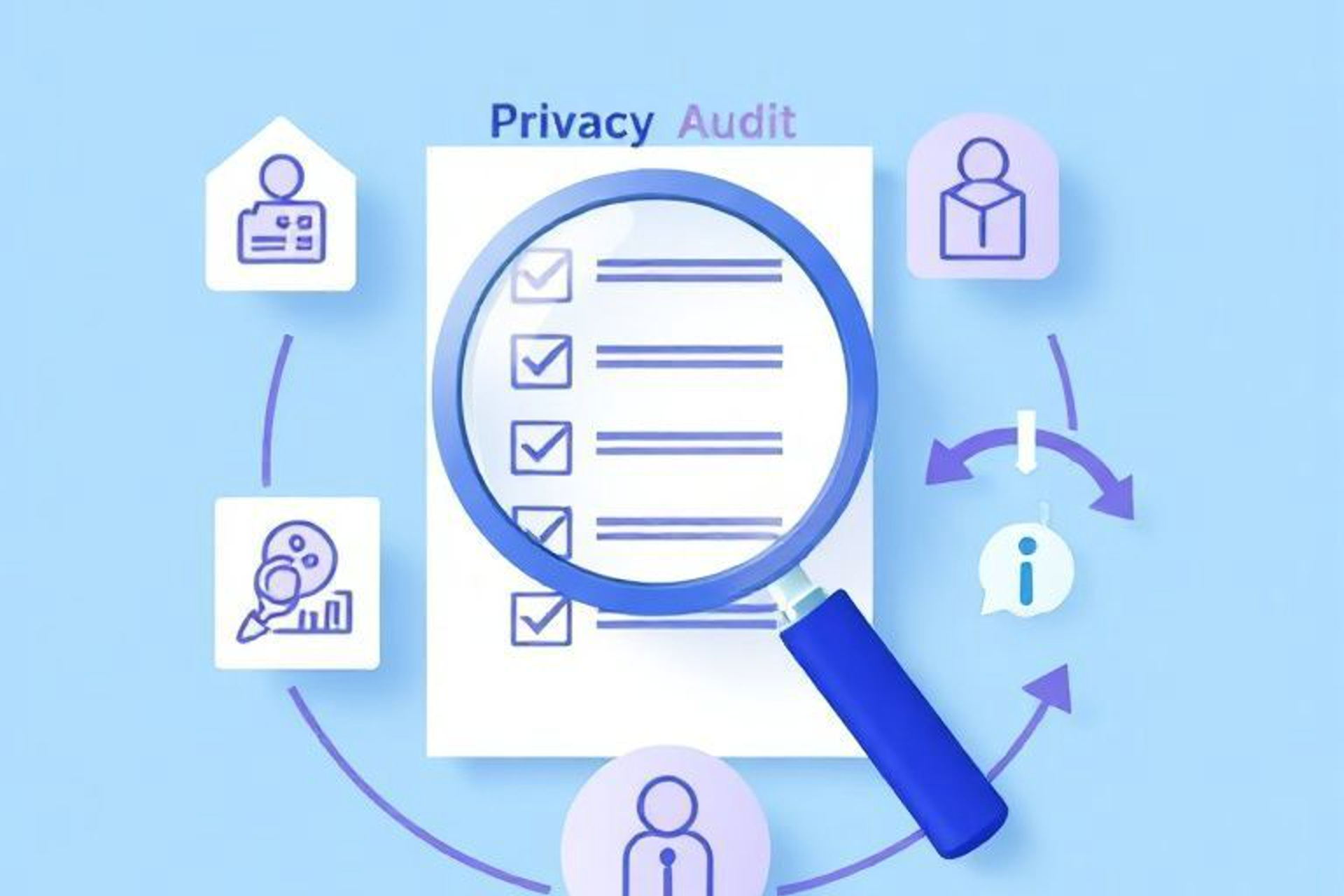
Regular privacy audits are essential for maintaining and improving your privacy posture. They help you identify gaps, verify compliance, catch drift from policies, and demonstrate accountability to users and regulators.
Why Privacy Audits Matter
The Risks of No Auditing
- Undetected Drift: Systems change, privacy degrades silently
- Compliance Gaps: Violations you don’t know about until fines arrive
- User Trust Erosion: Promises you’re not actually keeping
- Security Holes: Privacy and security issues often overlap
- Technical Debt: Privacy problems compound over time
The Benefits of Regular Audits
- Early Detection: Find issues before they become incidents
- Continuous Improvement: Systematic progress on privacy
- Regulatory Readiness: Prepared for GDPR/CCPA inquiries
- Team Accountability: Privacy becomes everyone’s responsibility
- User Trust: Demonstrable commitment to privacy
Types of Privacy Audits
1. Technical Privacy Audit
What it examines:
- Data collection points (what, where, why)
- Data flows (where does data go?)
- Access controls (who can see what?)
- Encryption implementation (at rest, in transit)
- Third-party integrations (data sharing)
- Retention policies (automated deletion)
- Anonymization practices (are they effective?)
Technical Audit Checklist:
## Data Collection
- [ ] Documented: What data is collected?
- [ ] Documented: Why each field is necessary?
- [ ] Verified: Minimal data collection practiced?
- [ ] Verified: User consent obtained before collection?
- [ ] Verified: Collection points logged and monitored?

## Data Storage
- [ ] Verified: Encryption at rest (AES-256)?
- [ ] Verified: Database access controls configured?
- [ ] Verified: Backup encryption enabled?
- [ ] Documented: Data location (region/jurisdiction)?
- [ ] Verified: Storage limits/quotas enforced?

## Data Transmission
- [ ] Verified: TLS 1.3 enforced everywhere?
- [ ] Verified: No plaintext transmission of sensitive data?
- [ ] Verified: Certificate validity and pinning?
- [ ] Tested: Downgrade attacks prevented?

## Data Access
- [ ] Verified: Role-based access control (RBAC)?
- [ ] Verified: Principle of least privilege applied?
- [ ] Verified: Access logging enabled?
- [ ] Verified: Admin access requires MFA?
- [ ] Tested: Unauthorized access properly blocked?

## Data Deletion
- [ ] Verified: Automated retention policies active?
- [ ] Verified: User deletion requests processed (< 30 days)?
- [ ] Verified: Data actually deleted (not just marked deleted)?
- [ ] Verified: Backups also purged after retention?
- [ ] Tested: Deletion process actually works?

## Third Parties
- [ ] Documented: All third-party data processors?
- [ ] Verified: Data Processing Agreements (DPAs) signed?
- [ ] Verified: Third-party security assessments done?
- [ ] Verified: Minimal data shared with third parties?
- [ ] Tested: Third-party data access can be revoked?
2. Policy Compliance Audit
Verify you’re doing what you promised:
// Automated policy compliance checker
class PolicyComplianceAuditor {
  async auditDataRetention() {
    // Check: Are we keeping data longer than policy states?
    const policy = await getRetentionPolicy();
    const violations = [];

    for (const dataType of policy.dataTypes) {
      const oldestRecord = await db[dataType.table].findFirst({
        orderBy: { createdAt: 'asc' }
      });

      const age = Date.now() - oldestRecord.createdAt.getTime();
      const maxAge = dataType.retentionDays * 24 * 60 * 60 * 1000;

      if (age > maxAge) {
        violations.push({
          type: dataType.name,
          policyDays: dataType.retentionDays,
          actualDays: Math.floor(age / (24 * 60 * 60 * 1000)),
          severity: 'HIGH'
        });
      }
    }

    return violations;
  }

  async auditThirdPartySharing() {
    // Check: Are we sharing data with undisclosed parties?
    const privacyPolicy = await getPrivacyPolicy();
    const disclosedVendors = privacyPolicy.thirdParties.map(t => t.name);

    const actualIntegrations = await getActiveIntegrations();
    const violations = actualIntegrations.filter(
      integration => !disclosedVendors.includes(integration.vendor)
    );

    return violations.map(v => ({
      vendor: v.vendor,
      dataShared: v.dataTypes,
      severity: 'CRITICAL'
    }));
  }
}
3. User Rights Audit
Verify GDPR/CCPA compliance:
// User rights compliance audit
class UserRightsAuditor {
  async auditRightToAccess() {
    // Can users actually export their data?
    const testUserId = 'audit-test-user';
    try {
      const export = await exportUserData(testUserId);
      return {
        compliant: export !== null && export.size > 0,
        responseTime: measureResponseTime()
      };
    } catch (error) {
      return { compliant: false, error: error.message };
    }
  }

  async auditRightToDeletion() {
    // Are deletion requests processed within 30 days?
    const deletionRequests = await db.deletionRequest.findMany({
      where: {
        status: 'pending',
        createdAt: {
          lt: new Date(Date.now() - 30 * 24 * 60 * 60 * 1000)
        }
      }
    });

    return {
      compliant: deletionRequests.length === 0,
      overdueRequests: deletionRequests.length,
      oldestRequest: deletionRequests[0]?.createdAt
    };
  }

  async auditRightToRectification() {
    // Can users update their own data?
    // Test that user-facing update APIs work
  }
}
4. Security Audit (Privacy Implications)
Privacy often depends on security:
#!/bin/bash
# Security audit with privacy focus

echo "=== Privacy-Focused Security Audit ==="

# Check encryption at rest
echo "✓ Checking database encryption..."
sqlite3 app.db "PRAGMA cipher_version;" || echo "❌ Database not encrypted!"

# Check TLS configuration
echo "✓ Checking TLS configuration..."
nmap --script ssl-enum-ciphers -p 443 yourdomain.com | grep -E "TLSv1\.[23]"

# Check for exposed secrets
echo "✓ Scanning for exposed secrets..."
truffleHog --regex --entropy=True .

# Check access logs for unauthorized access
echo "✓ Analyzing access logs..."
grep "401\|403" /var/log/nginx/access.log | tail -20

# Check third-party scripts
echo "✓ Auditing third-party scripts..."
curl -s https://yourdomain.com | grep -oP 'src="\K[^"]+' | grep -v "yourdomain.com"
Audit Frequency
Recommended audit schedule:
| Audit Type | Frequency | Owner |
|---|---|---|
| Automated technical scans | Daily | DevOps |
| Manual technical review | Monthly | Engineering |
| Policy compliance check | Quarterly | Legal/Privacy Officer |
| User rights verification | Quarterly | Customer Success |
| Third-party assessment | Annually | Security/Procurement |
| Full privacy assessment | Annually | External auditor |
Automated Audit Tools
Build continuous privacy monitoring:
// Continuous privacy monitoring
class PrivacyMonitor {
  async runDailyChecks() {
    const results = {
      date: new Date(),
      checks: []
    };

    // Check 1: No sensitive data in logs
    results.checks.push(
      await this.checkLogsForPII()
    );

    // Check 2: Encryption enabled
    results.checks.push(
      await this.verifyEncryption()
    );

    // Check 3: Access control working
    results.checks.push(
      await this.testAccessControl()
    );

    // Check 4: Retention policies enforced
    results.checks.push(
      await this.verifyRetention()
    );

    // Check 5: Third-party compliance
    results.checks.push(
      await this.auditThirdParties()
    );

    // Alert on failures
    const failures = results.checks.filter(c => !c.passed);
    if (failures.length > 0) {
      await this.sendAlert(failures);
    }

    // Log results
    await db.auditLog.create({ data: results });

    return results;
  }

  async checkLogsForPII() {
    // Scan recent logs for email addresses, SSNs, credit cards
    const piiPatterns = [
      /\b[A-Za-z0-9._%+-]+@[A-Za-z0-9.-]+\.[A-Z|a-z]{2,}\b/,
      /\b\d{3}-\d{2}-\d{4}\b/,
      /\b\d{4}[- ]?\d{4}[- ]?\d{4}[- ]?\d{4}\b/
    ];

    const logs = await getRecentLogs();
    const violations = [];

    for (const log of logs) {
      for (const pattern of piiPatterns) {
        if (pattern.test(log.message)) {
          violations.push({
            logId: log.id,
            pattern: pattern.toString(),
            timestamp: log.timestamp
          });
        }
      }
    }

    return {
      name: 'PII in Logs Check',
      passed: violations.length === 0,
      violations
    };
  }
}

// Run daily
cron.schedule('0 3 * * *', async () => {
  const monitor = new PrivacyMonitor();
  await monitor.runDailyChecks();
});
Privacy Audit Report Template
# Privacy Audit Report
**Date:** 2025-11-10
**Auditor:** [Name]
**Scope:** [What was audited]

## Executive Summary
- Overall Status: [Green/Yellow/Red]
- Critical Issues: [Number]
- High Priority: [Number]
- Recommendations: [Number]

## Findings

### Critical Issues
1. **[Issue Title]**
   - **Risk:** [Description of privacy risk]
   - **Evidence:** [What was found]
   - **Impact:** [Who is affected, how severely]
   - **Recommendation:** [How to fix]
   - **Timeline:** [When to fix by]

### High Priority Issues
[Similar format]

### Medium Priority Issues
[Similar format]

## Positive Findings
- [Things done well]
- [Areas of compliance]

## Metrics
- Data types collected: [Number]
- Third-party processors: [Number]
- Average deletion request time: [Days]
- Encryption coverage: [Percentage]
- Access control compliance: [Percentage]

## Recommendations
1. **Immediate Actions** (0-30 days)
2. **Short-term Improvements** (1-3 months)
3. **Long-term Initiatives** (3-12 months)

## Follow-up
Next audit date: [Date]
Responsible parties: [Names]
Action Items
- Schedule regular privacy audits (at minimum quarterly)
- Create privacy audit checklist for your application
- Implement automated privacy compliance checks
- Document current privacy practices
- Conduct first privacy audit
- Create remediation plan for findings
- Assign privacy audit responsibilities
- Set up continuous privacy monitoring
Key Takeaways
- Regular Audits Prevent Surprises: Don’t wait for an incident to discover problems
- Automate What You Can: Continuous monitoring > annual checkboxes
- Document Everything: Audits create accountability and compliance evidence
- Act on Findings: Audits are worthless without remediation
- Privacy is a Process: It requires ongoing attention, not one-time effort
Remember: What gets measured gets managed. Regular privacy audits ensure you’re actually delivering on your privacy commitments, not just promising them.
Part of the Privacy-First Practices series - practical privacy engineering for modern applications.