Table of Contents
If You Thought Human Adjusters Were Bad, Wait Until You Meet Their AI Replacement
The insurance industry just showed us exactly what’s coming. And it’s not good for contractors who aren’t prepared.
You’ve dealt with the adjuster who shows up three weeks after the storm, squints at the roof damage for twelve minutes, and hands you a lowball estimate with a straight face. You’ve argued over line items. You’ve had claims dragged out for months. You’ve lost jobs because a homeowner gave up waiting and just went with whoever the insurance company recommended.
That adjuster was frustrating. But at least he was a person.
What’s coming next is going to make him look reasonable.
What’s Already Happening in Healthcare
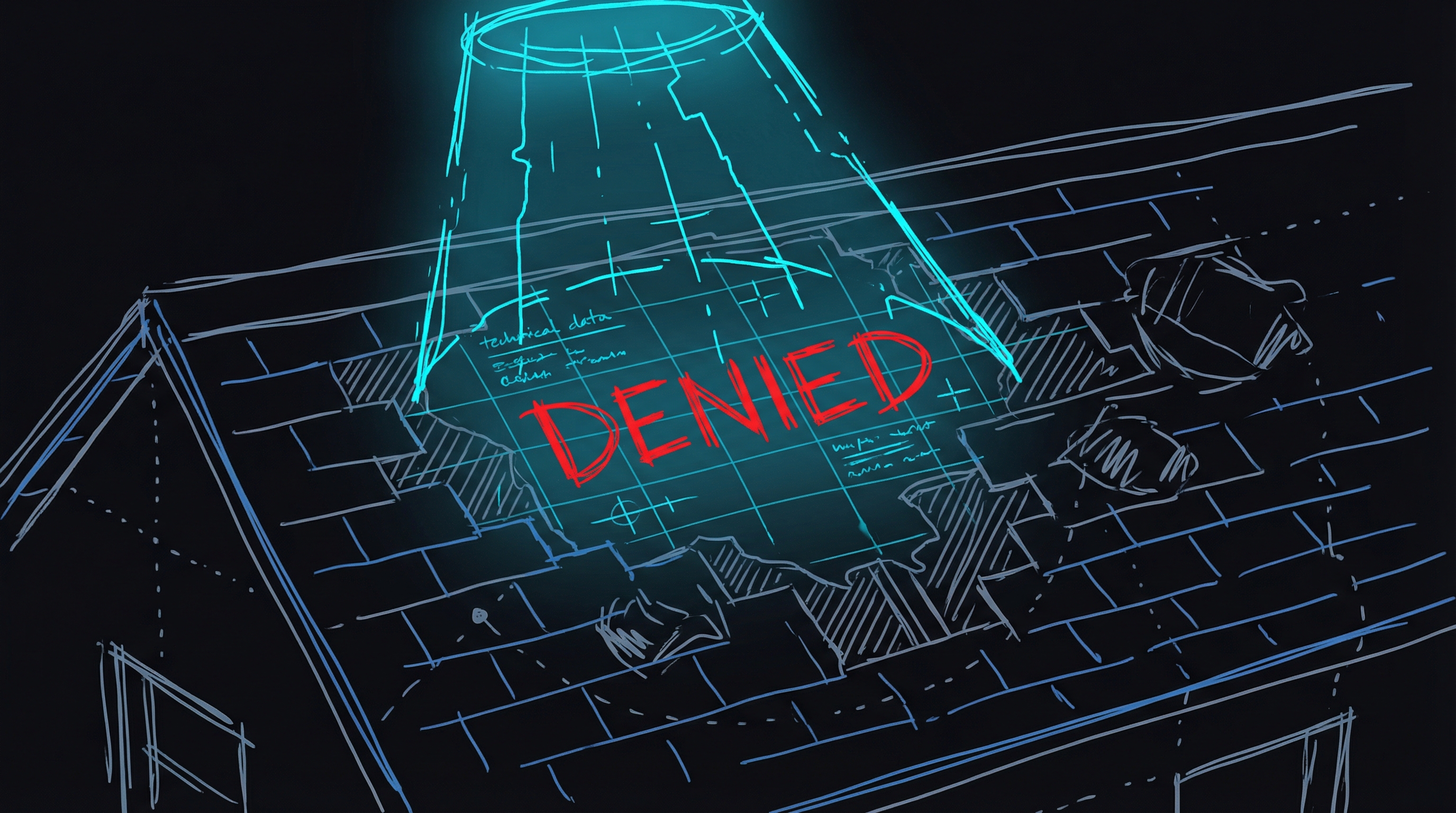
Last month, the US government quietly launched a program called WISeR. It hands AI companies the authority to approve or deny Medicare treatment for over 10 million Americans across six states.
Here’s the detail that should make every contractor pay attention: these AI companies get paid based on “averted expenditures.” That’s Washington-speak for denied claims. The more they deny, the more they earn.
We already have a preview of what this looks like in practice. UnitedHealthcare deployed AI claim review starting around 2020. By 2022, their denial rate had doubled. When patients actually appealed those denials, 90% were overturned - meaning the AI was wrong the majority of the time. The Medicare Group Management Association called these companies “AI bounty hunters.”
Cigna was reviewing and denying claims at 1.2 seconds per case. One point two seconds. There’s no human being reading anything at that speed.
Right now this is a healthcare story. But the business model isn’t new, and it isn’t staying in healthcare.
You Already Know This Pattern
Construction insurance adjusters have worked on incentive structures for decades. “Independent” adjusters who aren’t independent at all. Desk reviews where someone in an office overrides your field estimate without ever touching the property. Scope of loss disagreements where every line item is a negotiation.
Contractors who work storm damage, liability claims, or property damage know exactly what I’m talking about. The system was already tilted. The human element - slow as it was - at least meant you could argue, document, escalate, and sometimes win.
AI changes that math significantly.
A system that reviews your claim in 1.2 seconds isn’t reading your photos, your documentation, or your detailed scope. It’s pattern-matching against training data optimized to find reasons to pay less. And when it’s paid based on how much it saves the insurer, that optimization has one direction.
What This Means for Contractors
Think about the jobs where insurance money is in the play: hail damage roofing, water mitigation, fire restoration, liability claims, property damage repairs. For contractors in those verticals, insurance approval isn’t a side issue - it’s the difference between getting the job and losing it.
The adjusters you’re already fighting are going to be replaced by systems that are faster, more consistent, and financially motivated to say no. The black-box nature of AI decisions means you often won’t even get a coherent reason. Just a denial code and an appeal process designed to be difficult enough that most people drop it.
That 90% overturn rate on UnitedHealthcare’s AI denials is important. It means the decisions are wrong most of the time - but most people never appeal. They just accept the denial. The system counts on that.
Contractors who don’t have their documentation locked tight, their scope airtight, and their appeals process ready are going to get eaten alive. And the ones who figure out how to fight back systematically are going to clean up on the jobs that their competitors keep losing to bad AI decisions.
Two Types of Contractors Are Emerging
There are contractors who’ll get hit by the AI denial wave the same way they got hit by difficult adjusters - one job at a time, reactive, grinding through each fight manually.
And there are contractors who are going to get ahead of it. Who’ll build systems that document everything automatically, generate claims packages that are harder to deny, and respond to denials faster than a human-only process allows.
The gap between those two groups is about to get a lot wider.
Next week: How smart contractors are using automation to fight AI insurance denials - and winning. [Part 2 drops March 3rd.]
P.S. - If insurance claims are a meaningful part of your business, this is worth taking seriously now. Book a 60-minute Construction Automation Strategy Session - $150, credited toward implementation if you move forward. We’ll look at your current claims documentation workflow and identify exactly where you’re vulnerable.
Frequently Asked Questions
Is AI claim review actually being used in construction insurance right now?
Not at the same scale as healthcare yet - but the technology and the financial incentive are both there. Carriers have been using algorithmic review tools in property and casualty claims for years. The WISeR program is significant because it normalizes paying AI companies based on denial rates, which is a model that insurers in every sector will study closely.
If I document my claims thoroughly, does it matter how the AI decides?
Documentation is your primary defense regardless of who or what is reviewing. AI systems that deny claims are often doing pattern matching - a well-structured claim with complete photo documentation, a detailed scope, and proper line item support is harder to deny automatically than a loose one. It also gives you a stronger foundation for appeal if the initial decision goes against you.
What happens when contractors appeal AI insurance denials?
The UnitedHealthcare data is the best public example: 90% of appealed AI denials were overturned. The problem is that the appeal process is designed to be time-consuming enough that most people don’t bother. For contractors, that means you need a streamlined appeals workflow or you’re leaving significant money on the table every year.
How does this connect to construction automation?
Claims documentation, scope generation, photo organization, and appeals tracking are all administrative workflows - and they’re all automatable. Contractors who systematize this work produce better claims packages faster and respond to denials before the window closes. That’s what Part 2 covers next week.
AIL-3 | AI Transparency: This article was drafted with AI assistance and reviewed, edited, and approved by the author. All recommendations are based on 20 years of experience in the roofing and construction industry.