Table of Contents
How Smart Contractors Stopped the Sub Shuffle
Automated coordination that creates real accountability
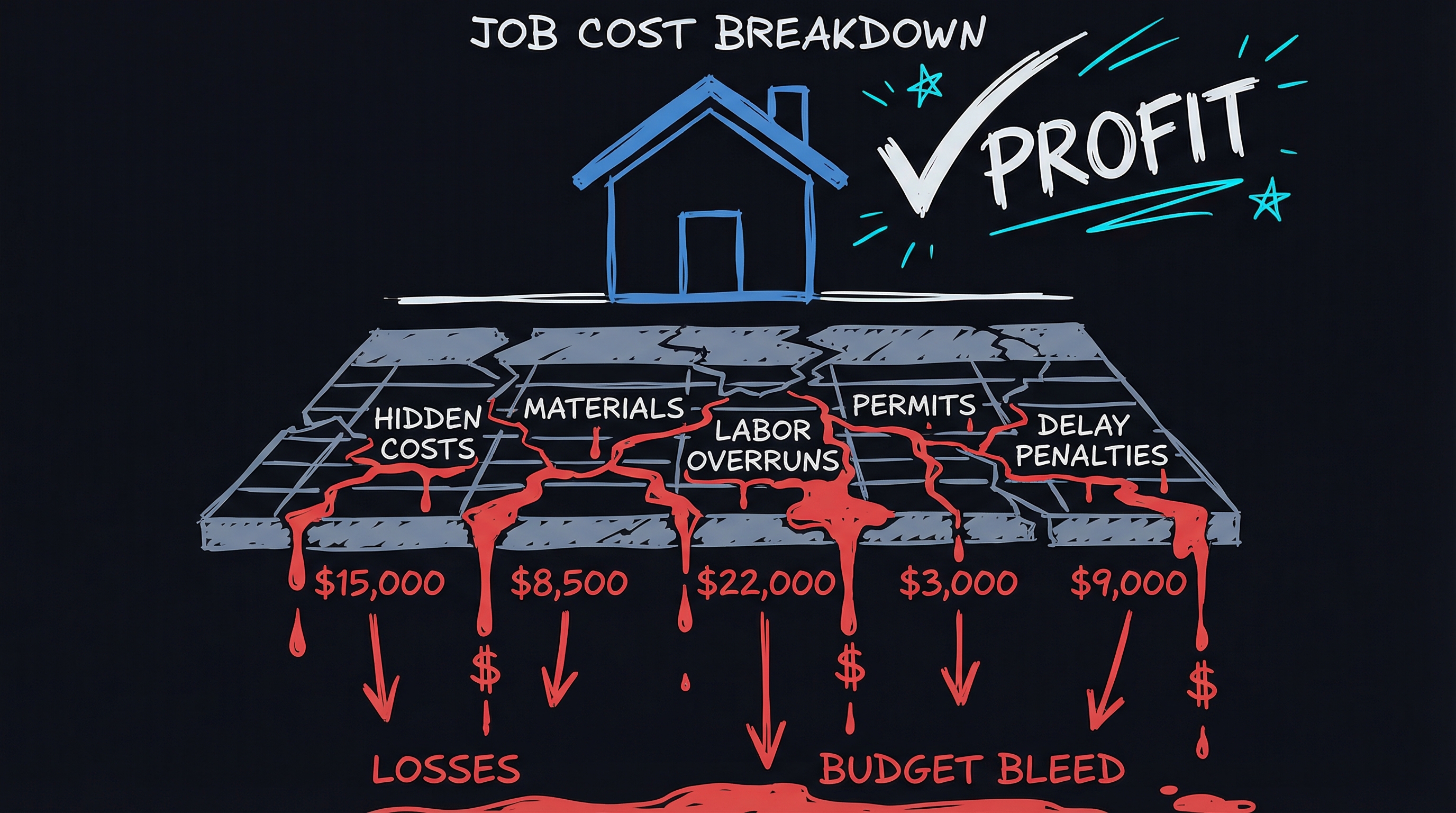
Previously: Your Sub No-Showed Again. Now What? - Why text-based coordination costs you $15,000-$25,000 annually.
What Actually Works
The contractors who’ve solved subcontractor chaos aren’t using magic. They’re using systems that create accountability at every step.
Before: Call sub → verbal confirmation → text reminder → hope they show up → scramble when they don’t
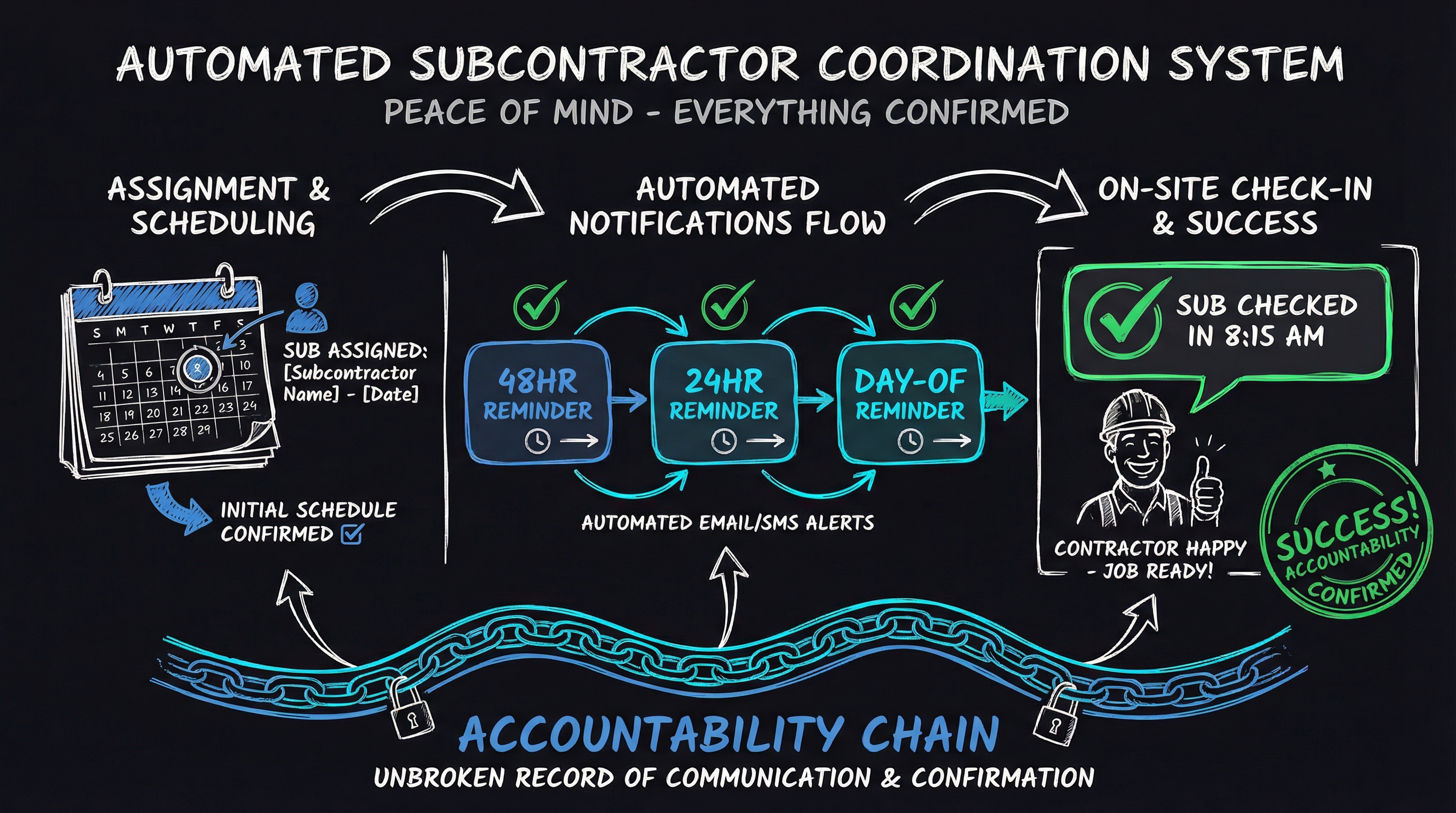
After: Schedule sub in system → automatic confirmation request → reminder sequence → check-in verification → instant alerts if something’s wrong
The difference isn’t just convenience. It’s documented accountability that changes behavior.
How It Works in Practice
When you schedule a sub:
- They receive a formal job request (not a text that gets buried)
- They confirm acceptance in the system (documented commitment)
- The job appears on their calendar automatically
- Your schedule updates to show confirmed status
48 hours before the job:
- Automatic reminder goes out
- Sub confirms they’re still coming
- If no confirmation, you get an alert (time to find backup)
Morning of the job:
- Sub gets final reminder with address and scope
- When they arrive, they check in (you see it in real-time)
- If they don’t check in by expected time, you get an alert immediately
Result: You find out about problems at 8:15 AM, not 2 PM. That’s the difference between making one phone call and losing an entire day.
The Accountability Effect
Here’s what happens when subs know you have a system:
First time: They get the automated confirmation request. “Huh, this is more formal than usual.” They confirm.
When they consider no-showing: They know you’ll have documentation. They know the system will alert you instantly. They know there’s a record.
Over time: Your jobs become “real” jobs. Not texts to forget about—scheduled commitments with accountability attached.
The contractors using these systems report 70-80% reduction in no-shows. Not because their subs became different people, but because the system changed the dynamic.
What You Need
A proper subcontractor coordination system includes:
- Central scheduling visible to your team and subs
- Automated confirmation sequences that get acknowledgment
- Reminder workflows at key intervals (48hrs, 24hrs, morning of)
- Check-in verification so you know when they arrive
- Alert system for missed confirmations or check-ins
- Documentation of all communications (useful for disputes)
This can integrate with your existing project management or run standalone. The key is automation—you shouldn’t be manually texting reminders.
The ROI
Investment: $15,000-$25,000 for implementation (depends on complexity)
Annual savings from reduced no-shows: $15,000-$25,000 (idle labor, rescheduling)
Break-even: 12-18 months, then pure savings
Hidden benefits:
- Bid more confidently (you can trust your schedule)
- Better customer experience (fewer delays to explain)
- Professional reputation (subs tell each other who’s organized)
- Reduced stress (you’re not constantly putting out fires)
Your Next Step
Every GC has different sub relationships and project patterns. A system that works for a roofing company running 20 concurrent residential jobs looks different from a commercial GC coordinating 15 specialty trades on one site.
Book a 60-Minute Strategy Session →
We’ll map your current sub coordination workflow, identify where accountability breaks down, and design automation that fits how you actually work. $150, credited toward implementation.
FAQ
Will my subs actually use a coordination system?
Yes—if it makes their life easier. A good system doesn’t add work for subs. They get clearer job details, fewer “where are you?” calls, and automated reminders they don’t have to manage. Most subs appreciate working with organized GCs.
What if I work with the same subs on every job?
Even better. Once they’re set up in the system, scheduling them is faster than texting. And consistent subs benefit most from the accountability—it formalizes the relationship in a way that works for both sides.
Can this integrate with my existing project management?
Usually yes. Most systems can connect with popular PM tools, calendars, and communication platforms. The strategy session identifies what you’re already using and how coordination automation can fit in.
One-time investment, lifetime value. You own the system—no per-user SaaS fees forever.
AIL-3 | AI Transparency: This article was drafted with AI assistance and reviewed, edited, and approved by the author. All recommendations are based on 20 years of experience in the roofing and construction industry.