How Smart Contractors Stopped Losing Leads During Busy Season
- Rob Pratt
- Automation , Construction , Business
- May 19, 2026
Table of Contents
How Smart Contractors Stopped Losing Leads During Busy Season
Automated systems that fill the pipeline while you’re running crews
Previously: You’re So Busy Doing the Work That You’re Losing the Next Work - Why peak season turns your busiest weeks into your competitors’ best recruiting months.
How Automation Fixes This
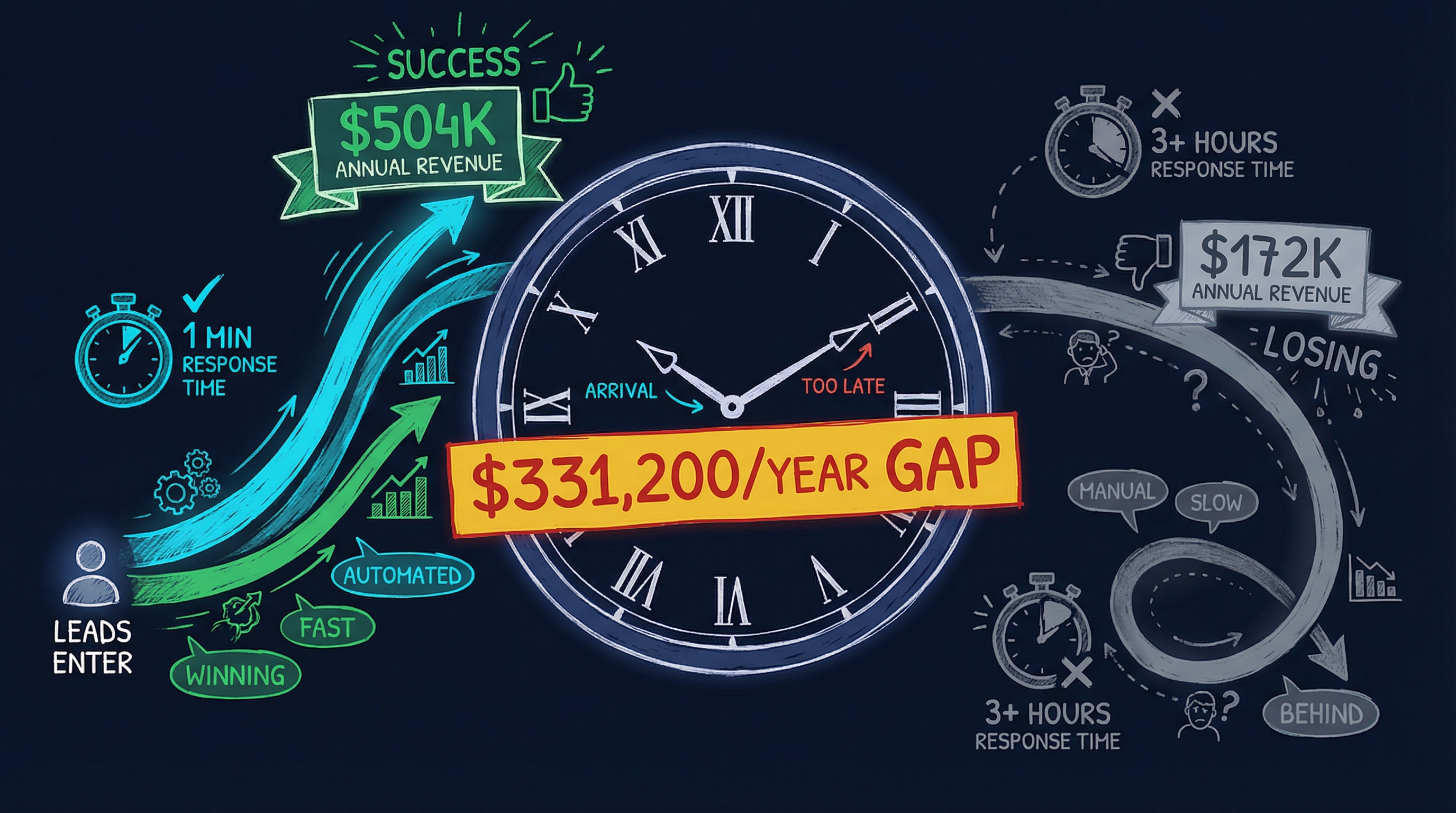
Same Wednesday, same 10 AM lead—different outcome.
Before: Lead submits form → sits in inbox → gets a generic reply hours later → goes cold
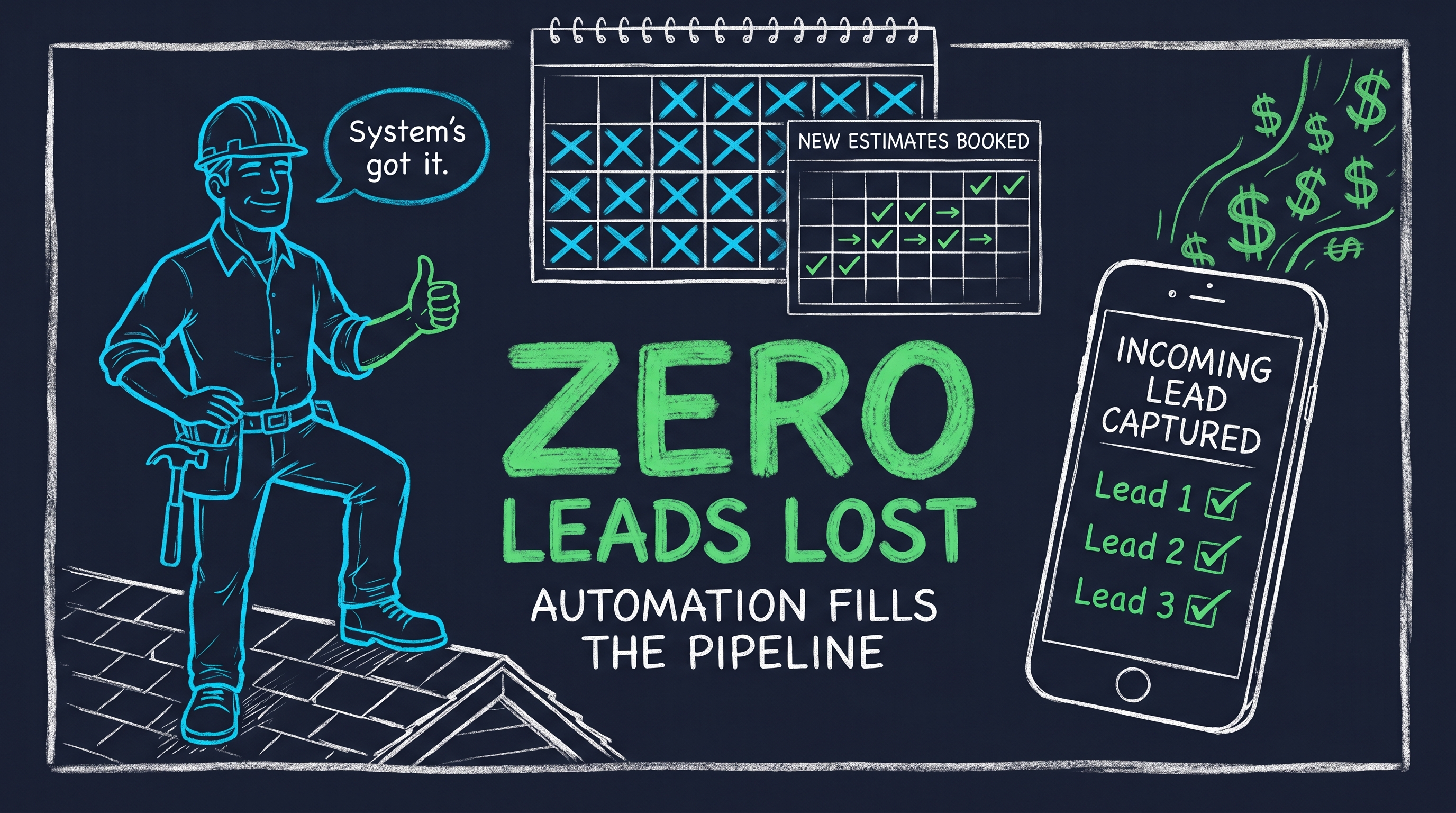
After: Lead submits form → instant professional response → books an estimate → confirmation sent → owner’s calendar updated automatically
The difference: the second contractor’s office staff didn’t touch that lead. The system handled intake, response, and scheduling without anyone breaking away from active jobs.
What Actually Gets Fixed
The seasonal customer service problem has three parts. All three are solvable.
New lead capture and response. Every inquiry needs an immediate, professional response—without your office staff touching it. Automated intake acknowledges the lead, sets expectations, and moves them toward booking. It runs at 10 AM and 10 PM. It doesn’t take vacation or go on job sites.
Existing client communication. The number one complaint homeowners have about contractors is “I didn’t know what was happening.” Automated milestone updates—job started, materials delivered, work complete, invoice coming—eliminate the check-in calls before they happen. Your crew marks a milestone, the client gets a message. No manual work.
Follow-up on open estimates. In slow season, you follow up on every quote. In busy season, quotes go out and get buried. An automated follow-up sequence—professional, spaced out, personalized by project type—closes jobs you quoted but forgot to chase.
Contractors using these systems see 40-60% improvement in lead conversion during peak months and a sharp drop in client communication complaints.
The Competitive Edge
Busy season is when your competitors are most vulnerable—and when you’re most likely to hand them the advantage.
When your quality matches the guy down the street but his systems make clients feel informed, he gets the referrals and you get the headaches. Automation handles routine touchpoints so you can be present for the ones that matter.
What It Takes
Implementation: $15,000-$30,000 depending on scope Timeline: 30-45 days to deployment Break-even: 3-5 weeks of recovered leads pays for it Annual value: Ongoing—the system runs every busy season without rebuilding
One-time investment. You own it. No monthly SaaS fees stacking up year after year.
Your Next Step
Book a 60-Minute Strategy Session →
We’ll dig into your specific workflow, map what to automate, and give you a realistic picture of what it costs and what it returns. $150, credited toward implementation.
FAQ
Is this only useful for roofers, or does it apply to other trades?
Any contractor with a seasonal peak—HVAC, siding, painting, landscaping. The triggers differ but the problem is identical: too many leads during the months you’re most stretched. Systems are built to your trade and workflow.
What if my busy season has already started?
A basic lead intake system can be live in 2-3 weeks. Full client communication automation runs 4-6 weeks. Mid-season still means recovering the back half of peak. Waiting until October means you already lost it.
One-time investment, lifetime value. Same busy season next year—with a full pipeline instead of an empty one.
AIL-3 | AI Transparency: This article was drafted with AI assistance and reviewed, edited, and approved by the author. All recommendations are based on 20 years of experience in the roofing and construction industry.