How Smart Contractors Are Using AI to Fight Insurance Denials—and Winning
- Rob Pratt
- Automation , Construction , Business , Insurance
- March 3, 2026
Table of Contents
How Smart Contractors Are Using AI to Fight Insurance Denials—and Winning
The same automation principles that built the denial machine can be turned against it.
Last week: If You Thought Human Adjusters Were Bad, Wait Until You Meet Their AI Replacement — AI systems paid per denial, 1.2-second claim reviews, and why contractors in storm damage, restoration, and property repair are directly in the crosshairs.
This week is the practical part.
Documentation Is Your Primary Weapon
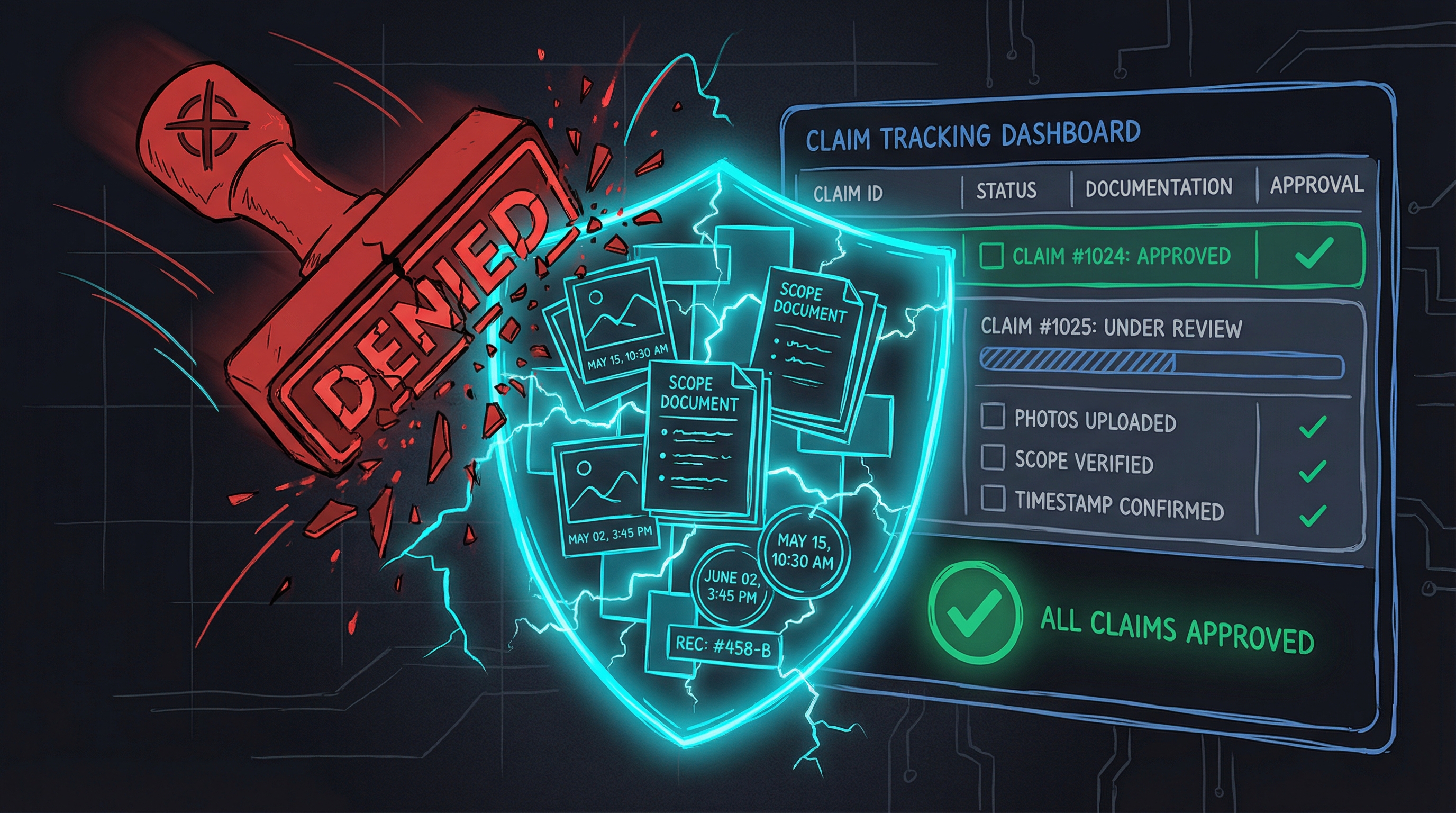
AI denial systems don’t read your claims the way a human adjuster does. They pattern-match. They scan for gaps, inconsistencies, missing fields, and weak line items. A vague scope with three photos gets flagged differently than a complete package with 47 timestamped, geotagged photos organized by damage category with scope notes on each one.
The contractors who win are building documentation workflows that generate airtight claim packages automatically, on every job. Photo documentation that timestamps and geotags at capture, organizes by damage type, and feeds directly into your claims package. Scope of loss documents built from templates that enforce completeness — no skipped line items, no missing measurements. Every communication, every site visit, every measurement logged before the claim is ever filed.
When the AI pattern-matches against your submission, it should find nothing to grab onto.
Speed Is the Second Weapon
Denials arrive fast. A lot of contractors sit on them.
The appeal window on most property and casualty claims runs 30 to 60 days. That sounds generous until you have no organized system for tracking denial deadlines. The denial lands in an inbox, someone notes they’ll deal with it, and it surfaces again when the window is closing or already closed.
Automated tracking changes that. Denial comes in, gets logged by denial code, deadline alert fires day one. The appeal package generates from your existing documentation. Common denial codes have pre-built response templates referencing your scope, photos, and the specific policy language being misapplied.
Recall that 90% of UnitedHealthcare’s AI denials were overturned on appeal. The decisions were wrong — a proper appeal demonstrated that. The barrier isn’t merit, it’s process. When the process is systematized, you appeal everything that should be appealed. That’s where the money is.
Pattern Recognition: AI Fighting AI
After tracking a few dozen claims across carriers, patterns emerge. Carrier A denies detachment work consistently until appealed. Carrier B uses a specific code on wind-driven rain that gets routinely overturned. Carrier C’s desk reviewers scope rooflines differently than field measurements support.
That intelligence should be in your system, not in your head.
When you’re building a claim for a property covered by Carrier A, your system flags the documentation that their denials typically hinge on. You pre-empt the denial before submission. When it comes anyway, the appeal template is already built from your existing documentation because you documented specifically against that carrier’s playbook.
Their system is trained to deny. Your system is trained to document, anticipate, and respond.
This Becomes a Competitive Advantage Homeowners Notice
There’s a category of homeowner that insurance-heavy contractors know well: the one who took a hailstorm hit six months ago, got a lowball settlement, didn’t know how to fight it, and is now looking at a deteriorating roof with inadequate insurance money to fix it properly.
They want a contractor who knows how to navigate this for them.
Most of your competitors accept denials and either eat the margin loss or pass it to the homeowner. Contractors who systematically fight and win become known for it. “They handled the insurance fight” is a referral that has a dollar value attached to it.
The contractors building these systems now are not waiting for AI denial rates to climb to the levels already documented in healthcare. They’re building the infrastructure while the window to get ahead is still open.
Your Next Step
If insurance claims are part of your revenue mix — storm damage, water mitigation, fire restoration, liability repairs — the documentation and appeals process you have today was built for human adjusters. It’s not going to hold up against systems reviewing your claims in under two seconds.
A 60-minute Construction Automation Strategy Session ($150, credited toward implementation if you move forward) is the place to audit your current claims workflow and map out exactly where the gaps are. We’ll look at your documentation process, your appeal history, and the specific carriers you work with most.
The contractors who systemize this first will handle more claims, win more appeals, and offer homeowners something their competitors can’t: someone who fights for the full payout.
One-time investment, lifetime advantage. You own the system we build — not a subscription that disappears if you stop paying.
Frequently Asked Questions
What types of contractors benefit most from claims documentation automation?
Contractors working storm damage roofing, water and fire restoration, siding, gutters, and general property repair are the most directly affected, since insurance approval is central to those jobs. But any contractor who encounters property and casualty claims as part of their work will see the same dynamic: AI review systems that pattern-match against weak documentation and generate denials that most people never appeal.
How long does it take to build a claims documentation and appeals system?
The scope depends on your volume and the carriers you work with most, but most contractors in our Growth and Enterprise packages see core documentation workflows operational within four to six weeks. Appeal tracking and carrier-specific templates are built out during the optimization period. The documentation habits are the fastest part to implement — they layer on top of field workflows you already have.
If I’ve never formally tracked denials and appeals before, where do I start?
Start with your last twelve months of claims and pull every denial you received. Categorize them by carrier and denial code. You’ll almost certainly find patterns you weren’t aware of — specific carriers or specific damage types where you’re getting hit repeatedly. That historical data is the foundation for building both better pre-submission documentation and targeted appeal templates going forward.
Is it worth appealing small denials, or only the large ones?
Every denial worth appealing has the same overhead cost if you have a manual process — which is why most contractors only fight the big ones and accept the rest. When the appeal process is systematized, the overhead per appeal drops significantly. Contractors who appeal consistently report that the aggregate recovery on smaller denials adds up to meaningful revenue annually, in addition to the signal it sends carriers that you’re not an easy target.
AIL-3 | AI Transparency: This article was drafted with AI assistance and reviewed, edited, and approved by the author. All recommendations are based on 20 years of experience in the roofing and construction industry.